
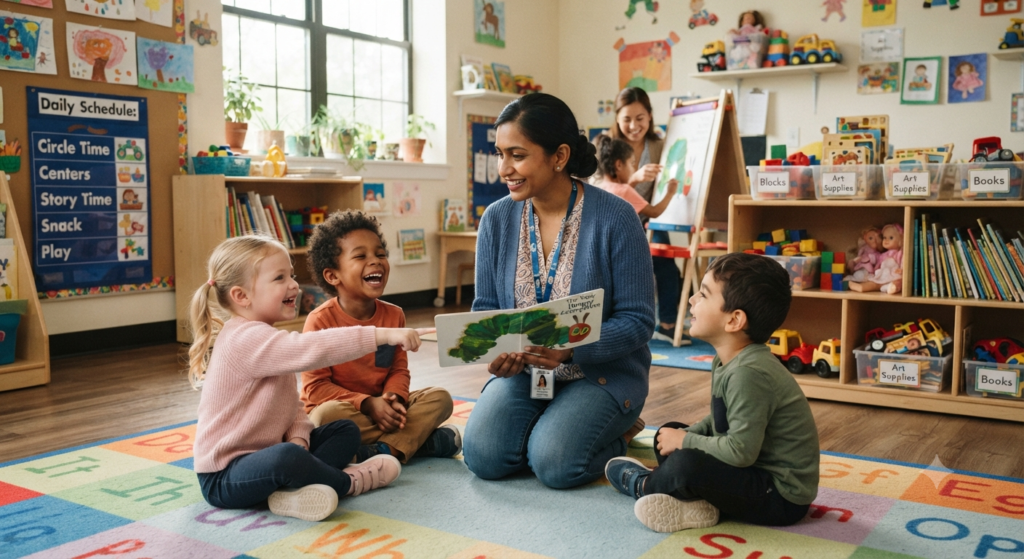
20 Behaviour Management Strategies for Young Children
Discover 20 practical behaviour management strategies for young children, backed by expert advice for parents and teachers, with real home and classroom examples.
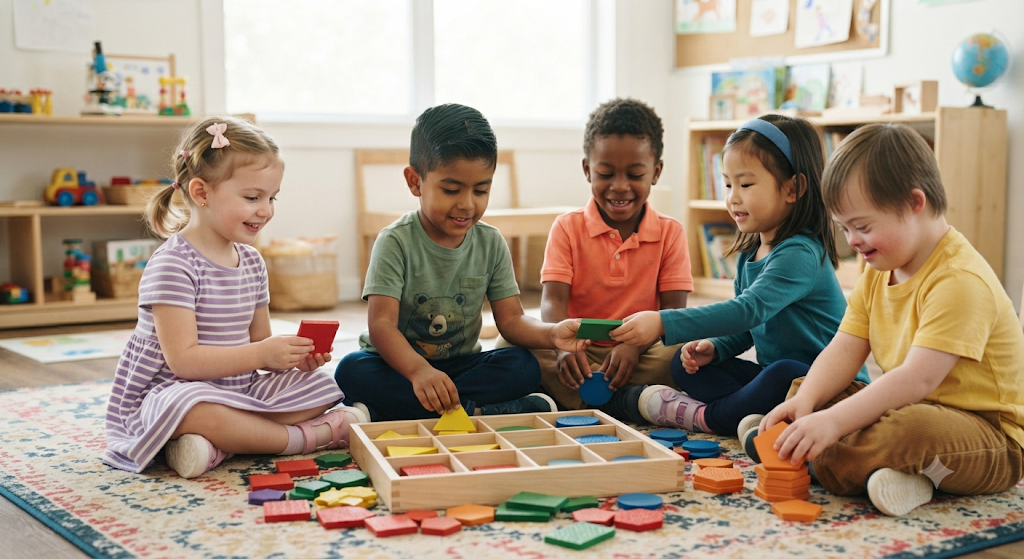
If you have ever knelt down in front of a crying, stamping, or shouting little one and thought, “What on earth do I do now?” you are in very good company. Every parent and every teacher has been there.
Here is something that changes everything once you truly take it on board: behaviour is a form of communication. A toddler who throws herself onto the floor in the supermarket is not being “naughty” for the sake of it. She is telling you, in the only way she currently knows how, that something feels too big, too tiring, too frustrating, or too overwhelming for her to manage.
Young children between the ages of two and eight are still building the mental tools they need to cope with big feelings. Their brains are simply not finished yet. The part of the brain responsible for self-control, patience, and thinking before acting the prefrontal cortex is one of the last parts to develop, and it will not be fully mature until well into early adulthood. So when a five-year-old melts down because his tower fell over, he is not choosing to overreact. He genuinely does not yet have the wiring to manage that disappointment smoothly.
Children display challenging behaviour for all sorts of reasons: tiredness, hunger, overstimulation, a change in routine, difficulty communicating a need, seeking attention or connection, or simply testing the boundaries of their world (which is a completely normal and healthy part of development). Sometimes it is as simple as a child not yet having the words to say “I feel left out” or “I’m scared”, so it comes out instead as hitting, shouting, or shutting down.
This is exactly why punishment alone so rarely works in the long run. Shouting, smacking, or taking away every privilege in sight might stop a behaviour in the moment, but it does not teach a child what to do instead. It does not build the skills of emotional regulation, problem-solving, or empathy that they will need for the rest of their lives. Worse, harsh punishment can damage the trust between adult and child, and can leave children feeling frightened or ashamed rather than understood.
What actually works and what this article is all about is a combination of patience, consistency, and empathy, wrapped up in clear, practical behaviour management strategies. These are not about letting children “get away with” anything. Quite the opposite. Positive behaviour support gives children the structure and skills they need to feel safe, capable, and in control of themselves. It just does so with warmth rather than fear.
Whether you are a parent navigating toddler tantrums, a preschool teacher managing a room of twenty energetic three-year-olds, or a kindergarten teacher trying to keep a lesson on track, this guide is for you. Below, you will find 20 tried-and-tested behaviour management strategies, drawn from real classrooms and real homes, along with the reasons they work, examples you can picture straight away, and tips to help you put them into practice today.
Why Positive Behaviour Management Matters
Before diving into the strategies themselves, it is worth pausing on why positive behaviour management is so important in the first place. This is not just about a quieter classroom or a calmer dinner table (although those are welcome bonuses). It is about shaping the whole trajectory of a child’s development.
Emotional development. Children who are supported with patience and understanding learn that their feelings are valid and manageable, rather than something to be frightened of or ashamed of. This builds the foundation for healthy emotional development throughout childhood and beyond.
Self-control. Every time a child is guided calmly through a difficult moment, rather than simply told off, they are practising the skill of self-regulation. Over time, this practice builds genuine self-control, which cannot be forced from the outside but must be developed from within.
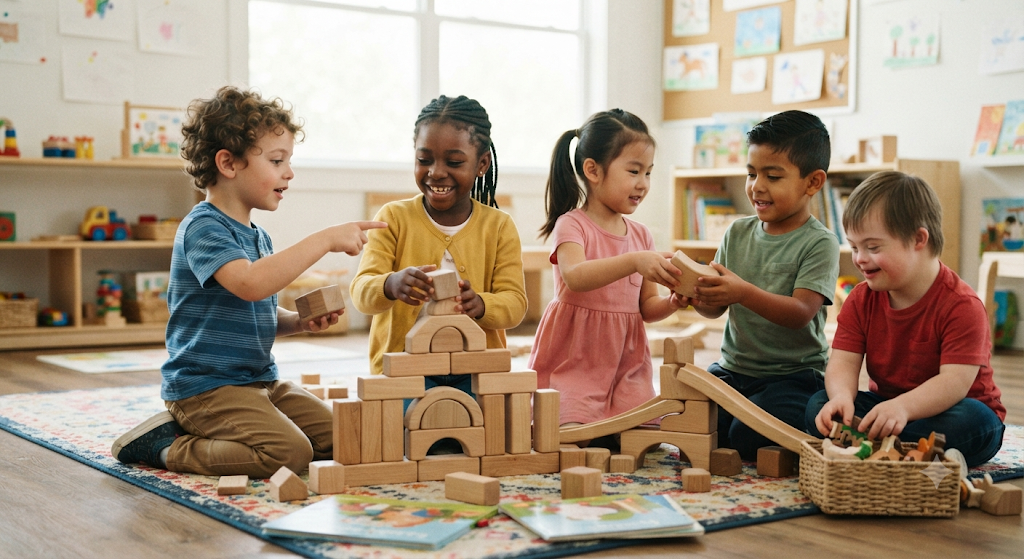
Social skills. Positive behaviour management naturally involves modelling and teaching skills like sharing, taking turns, listening, and resolving conflict. These are the building blocks of social-emotional development, and they matter just as much as academic skills, if not more.
Academic success. A child who feels safe, understood, and capable of managing their emotions is far better placed to concentrate, follow instructions, and engage with learning. Classroom management strategies that reduce anxiety and conflict free up mental space for actual learning to happen.
Confidence and independence. When children are given the tools to manage their own behaviour, rather than simply being controlled by adults, they develop a genuine sense of “I can do this.” That confidence carries forward into every area of life.
With all of that in mind, let’s get into the strategies themselves.
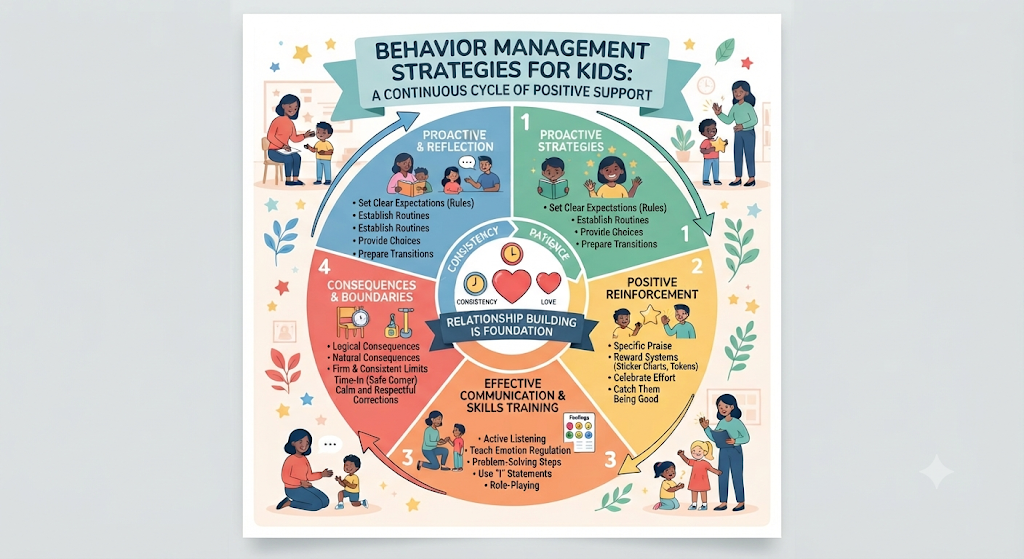
20 Behaviour Management Strategies for Young Children
1. Establish Clear Rules and Expectations
What it means Children thrive when they know exactly what is expected of them. This means having a small number of simple, clearly stated rules, rather than a long list of “don’ts.”
Why it works Young children do not yet have strong internal guidance systems, so clear external boundaries give them a sense of safety and predictability. Ambiguity, on the other hand, often leads to anxiety and testing behaviour, simply because the child is trying to work out where the actual boundary is.
Practical examples At home, a family might agree on three simple rules: “We use kind words, we ask before taking things, and we help tidy up.” In a preschool classroom, a teacher might display rules using pictures and short phrases, such as “Walking feet” and “Listening ears,” alongside simple illustrations.
Tips for success
- Keep rules to five or fewer, stated positively (what to do, not just what not to do).
- Involve children in creating the rules where possible, even young ones, so they feel ownership.
- Revisit and repeat the rules often, especially after a break like a weekend or holiday.
2. Build Strong Relationships with Children
What it means This strategy is about investing time in genuinely knowing each child their likes, worries, sense of humour, and what makes them tick before behaviour ever becomes an issue.
Why it works Children are far more likely to cooperate with adults they feel connected to and trust. A strong relationship acts like a “reserve tank” of goodwill that helps children respond better even during difficult moments.
Practical examples A parent might set aside ten minutes of undivided, device-free time each day to play whatever the child chooses. A teacher might greet each child by name at the classroom door each morning, taking a moment to notice something personal, such as new shoes or a exciting weekend.
Tips for success
- Get down to the child’s physical eye level when talking with them.
- Notice and comment on their interests, not just their behaviour.
- Aim for several positive interactions for every corrective one.
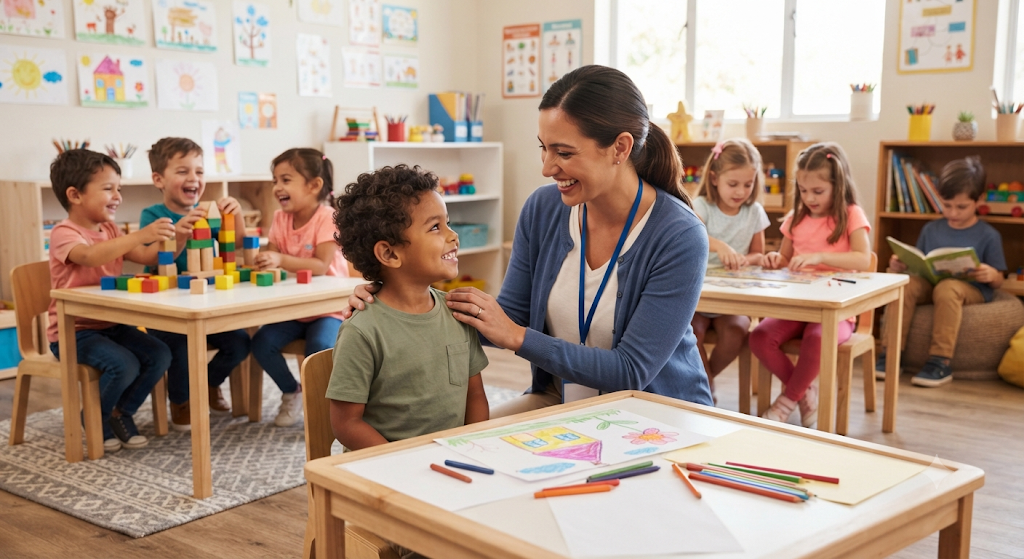
3. Use Positive Reinforcement
What it means Positive reinforcement means noticing and rewarding the behaviour you want to see more of, rather than only reacting to the behaviour you want to see less of.
Why it works Behaviour that gets attention tends to be repeated. If good behaviour is consistently noticed and appreciated, children learn that this is the behaviour that “works” to get connection and approval.
Practical examples At home, a parent might say, “I noticed you shared your crayons with your sister without being asked — that was really kind.” At school, a teacher might use a simple sticker chart or verbal praise when a child transitions calmly between activities.
Tips for success
- Be specific: “You put your shoes away straight away” works better than a generic “good job.”
- Vary your reinforcement between words, high-fives, and small privileges.
- Focus praise on effort and choices, not just outcomes.
4. Create Predictable Routines
What it means A routine is a consistent sequence of events that children can rely on, such as a regular morning, mealtime, or bedtime pattern.
Why it works Predictability reduces anxiety. When children know what is coming next, they do not need to expend energy worrying about it, and there is less scope for power struggles over “what happens now.”
Practical examples A family might follow the same wind-down routine every evening: bath, story, teeth, bed. A classroom might follow the same daily rhythm: circle time, activities, snack, outdoor play, story time.
Tips for success
- Keep routines simple enough to follow even on busy days.
- Use the same order and language each time to reinforce familiarity.
- Warn children a few minutes before a routine changes, such as “Five more minutes, then it’s bath time.”
5. Model the Behaviour You Want to See
What it means Children learn far more from what adults do than from what adults say. Modelling means consistently demonstrating the calm, kind, respectful behaviour you hope to see in return.
Why it works Young children learn largely through observation and imitation. If an adult shouts when frustrated, a child learns that shouting is how frustration is expressed.
Practical examples A parent who drops a glass and says calmly, “Oh well, accidents happen, let’s clean it up together,” teaches a very different lesson than one who reacts with anger. A teacher who says “I’m feeling a bit frustrated, so I’m going to take a deep breath” models emotional regulation in real time.
Tips for success
- Narrate your own emotional regulation out loud, even in small moments.
- Apologise sincerely when you get it wrong — this models accountability.
- Remember that children copy tone of voice as much as words.
6. Give Children Choices
What it means Offering a limited choice between two acceptable options gives children a sense of control within boundaries that adults still hold.
Why it works Much challenging behaviour stems from a child’s need for autonomy. Choices satisfy this need without handing over control of situations that genuinely need adult guidance.
Practical examples A parent might ask, “Would you like to wear the red jumper or the blue one?” instead of “Get dressed now.” A teacher might offer, “Would you like to tidy the blocks or the books first?”
Tips for success
- Only offer choices you are genuinely happy for the child to pick.
- Keep it to two options for younger children to avoid overwhelm.
- Use choices to defuse tension before it escalates, not only as a reward.
7. Recognise Good Behaviour Immediately
What it means Timing matters. Praise or acknowledgement given straight after the desired behaviour is far more powerful than praise given later.
Why it works Young children have a limited ability to connect delayed consequences with earlier actions. Immediate recognition helps them make the connection between what they did and the positive response it earned.
Practical examples The moment a toddler hands a toy to a sibling instead of grabbing, a parent might immediately say, “Thank you for sharing so nicely!” In a classroom, a teacher might catch a child sitting quietly during story time and quietly say, “I love how you’re listening right now.”
Tips for success
- Catch children “being good” rather than waiting for perfect behaviour.
- Keep recognition brief but genuine — over-the-top praise can feel insincere.
- Be consistent, so children learn to expect this response.
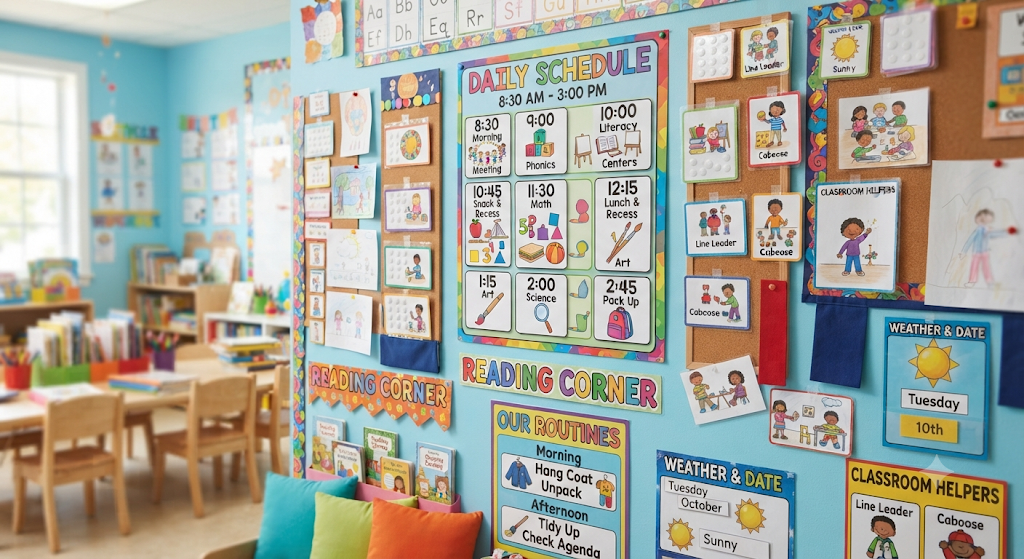
8. Use Visual Schedules
What it means Visual schedules use pictures, symbols, or photographs to show children the sequence of events in a day or task.
Why it works Young children, particularly those under six, process visual information more easily than spoken instructions alone. Visual schedules reduce the need for repeated verbal reminders and support children who are not yet strong readers.
Practical examples A classroom wall might display a picture timeline of the day: arrival, circle time, snack, outdoor play, lunch, home time. At home, a bathroom mirror might have a simple picture chart for the morning routine: wash face, brush teeth, get dressed.
Tips for success
- Use real photographs of the actual child or classroom where possible, for extra relevance.
- Involve children in moving a marker or turning over a card as each step is completed.
- Keep the schedule at the child’s eye level.
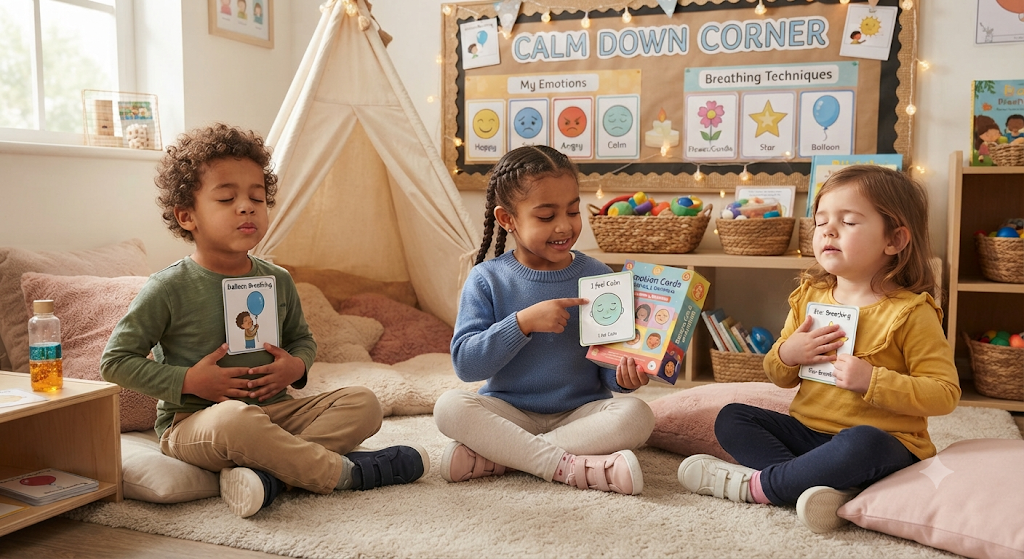
9. Teach Emotional Regulation Skills
What it means This involves explicitly teaching children how to recognise, name, and manage their emotions, rather than assuming they will simply pick this up naturally.
Why it works Emotional regulation is a skill, not an instinct. Just as children need to be taught to tie their shoes, they need to be taught how to notice rising frustration and calm their bodies before it overwhelms them.
Practical examples A parent might use a feelings chart at home, asking each evening, “Which face matches how you’re feeling?” A teacher might introduce simple breathing techniques, such as “smell the flower, blow out the candle,” during a calm moment, so children can use it later during a difficult one.
Tips for success
- Teach these skills when children are calm, not in the middle of a meltdown.
- Use simple, consistent language for emotions: “big feelings,” “wobbly,” “calm body.”
- Practise regularly, like any other skill, rather than expecting instant mastery.

10. Create Calming Spaces
What it means A calming space is a designated, cosy area where a child can go to settle their emotions, away from noise and stimulation.
Why it works When a child is overwhelmed, their brain is in a heightened state and simply cannot process reasoning or instructions well. A calming space gives their nervous system the chance to settle before any conversation or problem-solving takes place.
Practical examples A classroom might have a small corner with cushions, soft lighting, a few books, and a basket of sensory toys, described positively as a “cosy corner” rather than a punishment spot. At home, a bedroom nook with a beanbag and some favourite soft toys can serve the same purpose.
Tips for success
- Never present the calming space as a punishment frame it as a helpful, positive choice.
- Let children choose to use it themselves once they understand what it’s for.
- Keep it simple, soft, and free of overstimulating toys or screens.
11. Practise Active Listening
What it means Active listening means giving a child your full attention, reflecting back what they have said, and showing genuinely that you have heard and understood them.
Why it works Much challenging behaviour eases significantly once a child feels truly heard. Active listening also models respectful communication, which children will go on to use themselves.
Practical examples Instead of dismissing a complaint with “You’re fine,” a parent might say, “It sounds like you’re really upset that your tower fell down.” A teacher, hearing a child’s frustration about losing a turn, might reflect, “You really wanted a turn on the bikes, and it’s hard to wait.”
Tips for success
- Get down to eye level and put away distractions while listening.
- Reflect feelings back before jumping to solutions.
- Resist the urge to immediately correct or minimise what the child says.
12. Redirect Inappropriate Behaviour
What it means Redirection involves gently guiding a child away from an unwanted behaviour and towards a more appropriate one, without shaming or lengthy scolding.
Why it works Young children often lack impulse control rather than a genuine desire to misbehave. Redirection works with this reality, offering an alternative outlet rather than simply forbidding the original behaviour.
Practical examples If a toddler is banging a toy on the table, a parent might say, “Let’s bang this drum instead,” and hand over a more appropriate item. A teacher noticing a child about to throw sand might say, “Sand stays down low — let’s dig a tunnel here instead.”
Tips for success
- Redirect early, before the behaviour escalates.
- Keep your tone light and matter-of-fact rather than critical.
- Offer a genuinely appealing alternative, not just a “no.”
13. Use Natural Consequences
What it means Natural consequences are the outcomes that happen naturally as a result of a choice, without an adult imposing an artificial punishment.
Why it works Natural consequences teach cause and effect directly and are far more memorable than arbitrary punishments, because the lesson comes from real life rather than an adult’s authority.
Practical examples If a child refuses to wear a coat on a chilly day (and it is safe to allow it), they may feel cold and learn from that experience directly. If a child rushes through packing away and toys get left out, they might discover a favourite toy has gone missing or been stepped on.
Tips for success
- Only use natural consequences when they are safe and not overly harsh.
- Avoid saying “I told you so” — let the experience speak for itself.
- Follow up with empathy: “That felt cold, didn’t it? Shall we grab your coat next time?”
14. Encourage Problem-Solving Skills
What it means Rather than solving every conflict for children, this strategy involves guiding them to think through solutions themselves.
Why it works Problem-solving builds independence, resilience, and critical thinking. Children who practise finding their own solutions are better equipped to manage future conflicts without adult intervention.
Practical examples When two children argue over one toy, a teacher might ask, “What could we do so you both get a turn?” rather than simply deciding for them. At home, if siblings are squabbling over what to watch, a parent might ask, “How could we solve this fairly?”
Tips for success
- Ask open questions rather than supplying the answer immediately.
- Give children time to think, even if it feels slow.
- Praise the process of problem-solving, not just the final outcome.
15. Divide Tasks into Smaller Steps
What it means Breaking down a larger task, like tidying a room or getting dressed, into smaller, manageable chunks.
Why it works Young children can feel overwhelmed by big, vague instructions. Smaller steps feel achievable and reduce the frustration that often triggers challenging behaviour.
Practical examples Instead of “Tidy your room,” a parent might say, “First, let’s put all the books on the shelf.” In the classroom, instead of “Get ready for outside,” a teacher might break it into: “Coats on, then shoes, then line up at the door.”
Tips for success
- Give one instruction at a time for younger children.
- Use visual cues alongside verbal steps where possible.
- Celebrate the completion of each small step.
16. Minimise Environmental Distractions
What it means This involves adjusting the physical environment to reduce triggers for challenging behaviour, such as excessive noise, clutter, or overstimulating displays.
Why it works Young children are highly sensitive to their environment. A chaotic or overstimulating space can overwhelm their still-developing capacity for self-regulation, making challenging behaviour more likely.
Practical examples A teacher might reduce the number of toys available at once, rotating them instead of leaving everything out. At home, turning off background television during dinner or homework time can significantly improve a child’s ability to focus and cooperate.
Tips for success
- Observe which environments or times of day trigger the most difficulty.
- Reduce clutter and rotate toys or displays regularly.
- Consider lighting, noise levels, and the number of children in a space at once.
17. Teach Empathy and Kindness
What it means This strategy involves actively teaching children to notice and consider the feelings of others, rather than assuming empathy will simply develop on its own.
Why it works Empathy is a skill built through modelling, discussion, and practice. Children who understand how their actions affect others are more motivated to choose kind behaviour, not out of fear, but out of genuine care.
Practical examples A parent might say, “Look, your brother looks sad — what do you think might help him feel better?” A teacher might read stories that highlight kindness and follow up with simple discussion questions about how characters might be feeling.
Tips for success
- Narrate others’ feelings often, in everyday moments, not just during conflict.
- Praise kind acts specifically when you see them.
- Use books and role play as low-pressure ways to explore empathy.
18. Maintain Consistency
What it means Consistency means applying the same expectations and responses across different days, moods, and caregivers, rather than reacting differently depending on the circumstances.
Why it works Children learn boundaries through repetition. Inconsistent responses — where a behaviour is ignored one day and punished the next — create confusion and can actually increase testing behaviour as children try to work out the “real” rule.
Practical examples If bedtime is 7:30pm on weekdays, keeping this consistent (even when tempting to bend it) helps children settle into the routine more easily. In a classroom, if calling out is gently redirected on Monday, the same approach should apply on Friday.
Tips for success
- Agree on expectations with co-parents or co-teachers in advance.
- Revisit and adjust rules calmly rather than abandoning them under pressure.
- Remember that consistency does not mean rigidity — flexibility for genuine circumstances is healthy too.
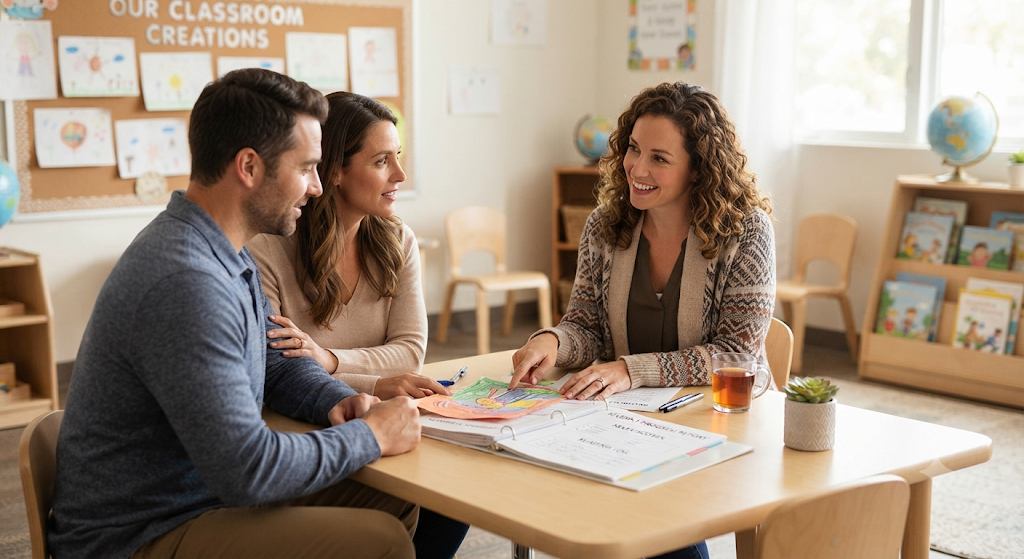
19. Collaborate with Families
What it means This strategy is particularly relevant for teachers and involves building open, respectful communication between school and home about a child’s behaviour and needs.
Why it works Children thrive when the adults in their lives are working together rather than at odds. Shared strategies between home and school create consistency, and parents often hold valuable insight into what works for their child.
Practical examples A teacher might send home a simple note describing a strategy that is working well in class, inviting parents to try something similar at home. Regular, friendly check-ins — not just at times of concern — help build trusting relationships between families and educators.
Tips for success
- Communicate positive updates, not only concerns.
- Ask parents what strategies work well at home.
- Approach conversations about behaviour with curiosity rather than blame.
20. Celebrate Progress Rather Than Perfection
What it means This means noticing and celebrating small steps forward, rather than expecting flawless behaviour every time.
Why it works Behaviour change is gradual, especially for young children whose skills are still developing. Focusing on progress keeps children motivated and helps adults maintain realistic, compassionate expectations.
Practical examples If a child who usually struggles with sharing manages to share once during the day, that moment deserves genuine celebration, even if other struggles happened too. A parent might say, “I noticed you took three deep breaths before shouting today that’s real progress!”
Tips for success
- Track small wins, even ones that seem minor.
- Avoid comparing a child’s progress to siblings, classmates, or an idealised standard.
- Remind yourself, as the adult, that setbacks are a normal part of the process, not a sign of failure. Read More about How to Manage Challenging Behaviour in Early Years
Behaviour Management Mistakes to Avoid
Even with the best intentions, certain habits can undermine positive behaviour management. Here are some of the most common ones to watch for.
Yelling. While it may stop a behaviour momentarily, yelling models exactly the dysregulated behaviour we hope children will avoid, and it can damage trust over time.
Inconsistent expectations. Applying rules differently depending on mood, tiredness, or setting confuses children and can increase testing behaviour.
Comparing children. Saying things like “Why can’t you sit still like your sister?” damages self-esteem and can create resentment rather than motivation.
Labelling children. Calling a child “naughty,” “difficult,” or “the troublemaker” can become a self-fulfilling prophecy, shaping how the child sees themselves.
Excessive punishment. Overly harsh or lengthy punishments rarely teach the intended lesson and can instead cause fear, shame, or defiance.
Unrealistic expectations. Expecting a two-year-old to sit still for twenty minutes, or a four-year-old to never interrupt, sets both adult and child up for frustration and failure.
Age-Appropriate Behaviour Expectations
Understanding what is genuinely typical for a child’s age helps adults respond with realistic, compassionate expectations rather than frustration.
| Age Group | Typical Behaviour | Common Challenges | Recommended Strategies |
|---|---|---|---|
| Two to three years | Growing independence, strong emotions, limited vocabulary for feelings, parallel play | Tantrums, biting, difficulty sharing, resistance to transitions | Predictable routines, simple choices, redirection, calm modelling |
| Three to four years | Increasing vocabulary, imaginative play, beginning to share, testing boundaries | Defiance, difficulty waiting, occasional aggression when frustrated | Clear rules, visual schedules, positive reinforcement, active listening |
| Four to five years | Longer attention span, cooperative play, growing empathy, more complex language | Impulsivity, exaggeration, occasional bossiness with peers | Problem-solving encouragement, natural consequences, emotional regulation teaching |
| Five to seven years | Developing self-control, understanding of rules and fairness, stronger friendships | Perfectionism, comparison with peers, occasional rule-testing at school | Consistency, family-school collaboration, celebrating progress, empathy-building |
Frequently Asked Questions
1. What is the most effective behaviour management strategy for toddlers?
Predictable routines combined with simple choices tend to work particularly well for toddlers, as they reduce anxiety while satisfying the toddler’s strong need for a sense of control.
2. How do I manage behaviour without shouting or smacking?
Focus on staying calm yourself, using redirection, active listening, and positive reinforcement. Preparing calming techniques in advance, for yourself as well as the child, makes a significant difference.
3. Why does my child behave well at school but not at home?
This is very common and often reflects the trust a child feels at home to express big feelings freely. It is not a sign that something is wrong; rather, home is often where children feel safest to “let go.”
4. How long does it take for positive behaviour strategies to work?
Change is usually gradual rather than instant. Many families and teachers notice small improvements within a few weeks of consistent effort, with more significant shifts over a few months.
5. What should I do if my child has a tantrum in public?
Stay as calm as possible, acknowledge the feeling (“I can see you’re really upset”), and avoid giving in purely to stop embarrassment. Once calm, a brief, simple conversation can follow.
6. Are rewards and sticker charts a good idea?
Used thoughtfully, they can support positive reinforcement, particularly for building new habits. It is important to pair them with genuine praise, rather than relying on rewards alone long-term.
7. How can teachers manage a classroom with several children showing challenging behaviour at once?
Consistent routines, visual schedules, and calming spaces help the whole group, while individual attention and consistent responses support children with more intense needs. Read More
8. Is it normal for a five-year-old to still have meltdowns?
Yes, this is entirely normal. Emotional regulation continues developing well beyond early childhood, and occasional meltdowns at this age do not indicate a problem.
9. How do I stay consistent when I’m exhausted?
Simplifying routines and rules, and agreeing on a small number of non-negotiables in advance, makes consistency far more manageable on difficult days.
10. When should I seek professional support for a child’s behaviour?
If challenging behaviour is frequent, intense, and significantly impacting daily life, safety, or relationships despite consistent positive strategies, it is worth speaking with a GP, health visitor, or educational psychologist for further guidance.
11. How is positive discipline different from permissive parenting?
Positive discipline maintains clear boundaries and expectations, delivered with warmth and empathy, rather than removing boundaries altogether. It is firm and kind at the same time, not one or the other.
Conclusion
Managing the behaviour of young children is rarely a straight line. There will be good days and harder days, moments of real progress and moments that feel like a step backwards. That is not a sign of failure it is simply what growing up looks like.
Every child learns at a different pace, shaped by their own temperament, experiences, and stage of development. What matters most is not perfection, from the child or from you, but the steady presence of patience, consistency, and genuine warmth over time.
By leaning on strategies like clear expectations, positive reinforcement, calming spaces, and active listening, you are giving children far more than good behaviour in the moment. You are helping them build the emotional and social skills that will serve them for the rest of their lives.
So on the harder days, be gentle with yourself too. You are doing important, difficult work and it matters more than you know.