
30 hands-on kindergarten lesson plans covering literacy, math, science, art, and SEL complete with objectives, materials, and free template.
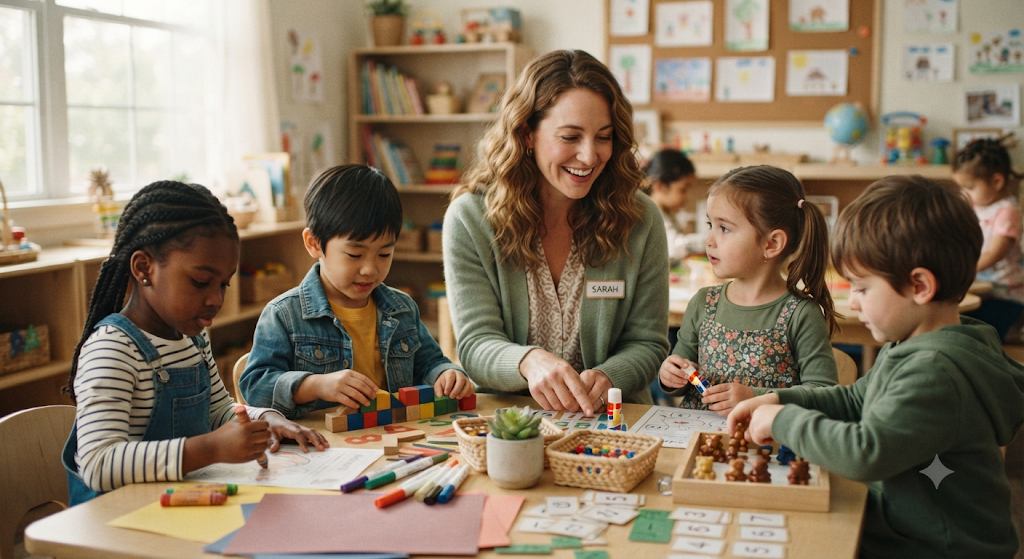
If you’ve ever stared at a blank weekly planner on a Sunday night wondering how you’re going to fill five days with lessons that are both fun and actually teach something, you’re not alone. After 15 years in early childhood classrooms, I can tell you the biggest myth in kindergarten teaching is that “structured” and “playful” are opposites. They’re not. The best kindergarten lesson plans blend the two, so children build real academic skills while they’re busy having fun, moving, and exploring.
This collection of 30 lesson plan ideas for kindergarten covers literacy, math, science, STEM, art, music, movement, social-emotional learning, fine and gross motor skills, outdoor learning, sensory play, and life skills. Every lesson plan below is classroom-tested, easy to prep, and built around real learning objectives not busywork. Whether you’re a new kindergarten teacher, a preschool teacher looking to stretch activities up a level, or a homeschool parent building your own curriculum, you’ll find ideas here you can use tomorrow morning.
What Makes a Great Kindergarten Lesson Plan?
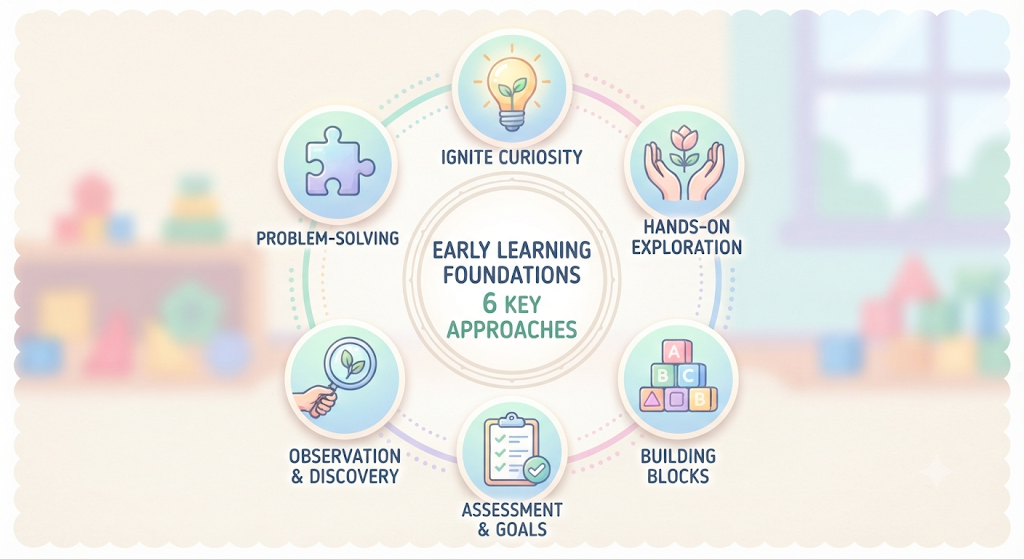
Before we jump into the lesson plans, it helps to know what separates a lesson that works from one that falls flat by 9:15 a.m. Every strong kindergarten lesson plan shares six ingredients:
- Clear learning objectives. Children (and teachers) do best when a lesson has one specific, measurable goal “identify the letter M and its sound,” not “learn the alphabet.”
- Active engagement. Five-year-olds learn through doing, not sitting. The best lessons ask children to move, build, sort, sing, or talk within the first few minutes.
- Hands-on learning. Manipulatives, art supplies, sensory bins, and real objects turn an abstract concept into something a child can touch and understand.
- Classroom management built in. Strong lessons anticipate transitions, noise levels, and clean-up time instead of leaving them to chance.
- Ongoing assessment. You don’t need a test. A quick observation checklist or a thumbs-up/thumbs-down check tells you who’s got it and who needs more support.
- Differentiation. Every group has a range of readiness levels. Great lessons build in an easy on-ramp and a challenge extension from the start.
This approach reflects the same principles early learning organizations like NAEYC recommend: developmentally appropriate practice that centers play as the primary vehicle for learning, not a reward for finishing “real work.”

How to Plan a Successful Kindergarten Lesson
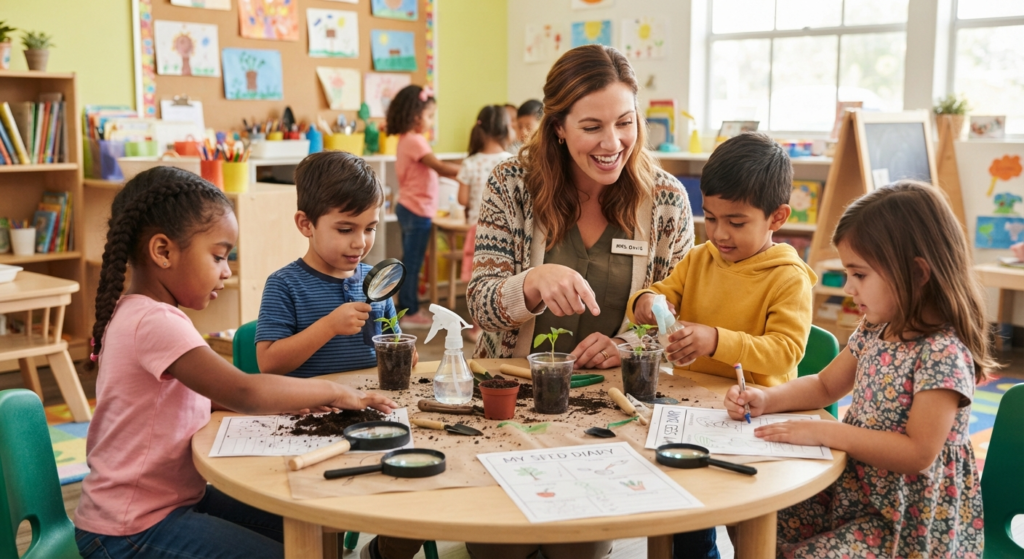
A reliable lesson-planning routine saves you hours every week. Here’s the five-step process I use for every lesson, whether it’s a five-minute circle time activity or a full STEM unit:
- Set one objective. Write it in kid-friendly language: “I can count to 20” rather than “students will demonstrate numeracy skills.”
- Choose materials that match your objective and your budget. Look around your classroom first. Most of the best kindergarten lessons use things you already own: blocks, crayons, paper plates, dried beans.
- Plan your transitions before you plan your activity. How will children move from circle time to centers? A planned transition song or signal prevents chaos.
- Time-block realistically. Kindergarteners typically hold focus for 10–15 minutes on a single task. Break longer lessons into warm-up, main activity, and practice segments.
- Build in a quick assessment. A checklist with three columns “got it,” “getting there,” “needs support” takes two minutes to fill out and tells you exactly who to pull for small groups tomorrow.
Following this structure also makes it easy to write formal lesson plans for observations or admin review, since every box objective, materials, procedure, assessment is already filled in.
30 Lesson Plan Ideas for Kindergarten
Below are 30 complete, ready-to-teach kindergarten lesson plans, organized by subject area. Each one includes learning objectives, materials, a step-by-step main activity, differentiation ideas, and a simple home connection so families can extend the learning. Feel free to adjust the timing to fit your daily schedule.
Literacy & Phonics
1. Letter Sound Scavenger Hunt
- Age Group: 4–6 years
- Learning Objective: Identify the initial sound of a target letter in everyday objects.
- Learning Outcomes: Children will name at least three objects that begin with the target letter sound.
- Materials Required: Letter card, classroom objects, small basket, checklist sheet.
- Preparation: Hide 8–10 objects starting with the target letter around the room.
- Warm-Up Activity: Sing the letter’s phonics song and pass the letter card around the circle.
- Main Activity (step-by-step): 1) Show the letter card and say its sound. 2) Explain the hunt rules. 3) Children search the room in pairs. 4) Each pair places found objects in their basket. 5) Regroup and name each object together, emphasizing the sound.
- Independent Practice: Children draw one found object and label it with the letter.
- Group Activity: Sort all found objects by letter sound on a floor mat.
- Assessment: Observation checklist can the child isolate the initial sound verbally?
- Differentiation Ideas: For support, pair with a peer buddy and use picture cards. For advanced learners, ask them to find objects with the letter anywhere in the word, not just at the start.
- Extension Activity: Create a class alphabet book, adding a page per week.
- Teacher Tips: Laminate the letter cards so you can reuse this lesson all year.
- Home Connection Activity: Send home a “letter hunt” bag for a fridge or pantry scavenger hunt.
- Estimated Time: 25 minutes
- Skills Developed: Phonemic awareness, vocabulary, gross motor movement
2. Rhyming Word Basket Sort
- Age Group: 4–6 years
- Learning Objective: Identify and sort words that rhyme.
- Learning Outcomes: Children will correctly sort at least 8 of 10 rhyming pairs.
- Materials Required: Picture cards, three labeled baskets, a puppet.
- Preparation: Print and cut rhyming picture pairs (cat/hat, dog/log, sun/bun).
- Warm-Up Activity: The puppet “gets confused” and needs help finding rhymes children shout out silly rhymes to warm up their ears.
- Main Activity (step-by-step): 1) Model one rhyming pair. 2) Hold up a card and say the word aloud. 3) Children decide which basket it rhymes with. 4) Repeat until all cards are sorted. 5) Review each basket together.
- Independent Practice: Match rhyming cards at a literacy center independently.
- Group Activity: Rhyme relay teams race to find a rhyming card from a pile.
- Assessment: Track how many rhymes each child sorts correctly without help.
- Differentiation Ideas: Support learners with only two rhyme families at a time. Challenge advanced learners to generate their own rhyming word out loud.
- Extension Activity: Read a rhyming picture book and pause for children to predict the rhyme.
- Teacher Tips: Keep a “rhyme jar” going all year add a new rhyme each morning meeting.
- Home Connection Activity: Families play “rhyme or not” in the car using street signs.
- Estimated Time: 20 minutes
- Skills Developed: Phonological awareness, listening skills
3. Story Sequencing with Picture Cards
- Age Group: 5–6 years
- Learning Objective: Retell a story in the correct beginning-middle-end sequence.
- Learning Outcomes: Children will arrange three to five picture cards in the correct story order.
- Materials Required: A familiar picture book, sequencing picture cards, sentence strips.
- Preparation: Print scene cards from a book you’ve read at least twice already.
- Warm-Up Activity: Reread the story aloud, pausing to ask “what happened first?”
- Main Activity (step-by-step): 1) Show mixed-up picture cards. 2) Ask children to identify the first event. 3) Build the sequence together on a pocket chart. 4) Retell the story using the cards as prompts. 5) Discuss why order matters.
- Independent Practice: Children sequence a shorter, simpler story on their own.
- Group Activity: Small groups act out the story in sequence like a mini play.
- Assessment: Note whether the child can identify first, next, and last independently.
- Differentiation Ideas: Use only three cards (beginning/middle/end) for support; add five to six cards with more detail for advanced learners.
- Extension Activity: Children draw their own three-panel comic strip of an event from their day.
- Teacher Tips: Choose books with a clear, repetitive story structure for this lesson’s first run.
- Home Connection Activity: Ask families to have their child retell their school day in order at dinner.
- Estimated Time: 30 minutes
- Skills Developed: Comprehension, sequencing, oral language
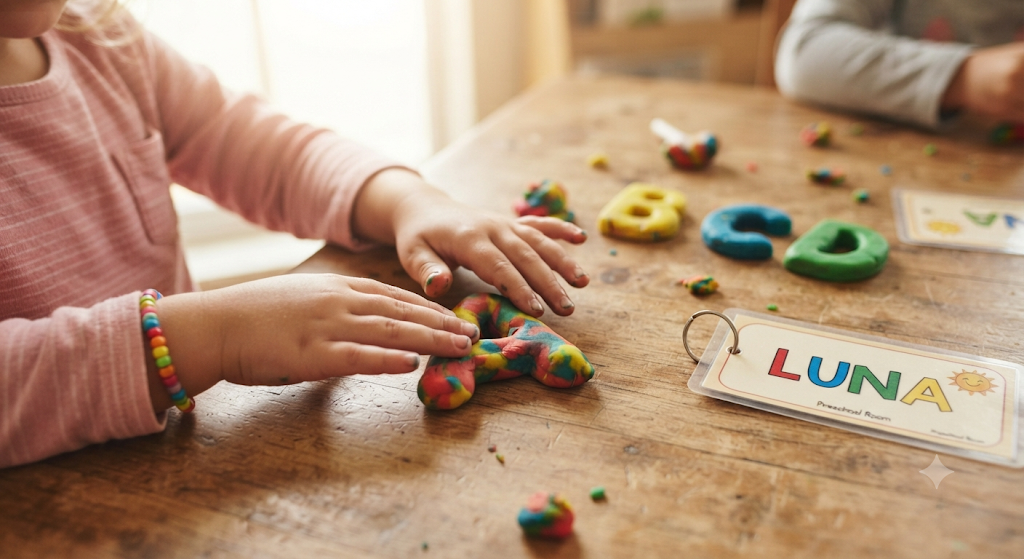
4. Name Writing Practice with Play Dough
- Age Group: 4–5 years
- Learning Objective: Form the letters of one’s own name correctly.
- Learning Outcomes: Children will roll play dough into the shape of each letter in their name.
- Materials Required: Play dough, laminated name cards, placemats.
- Preparation: Print each child’s name in bold, dotted font on a card.
- Warm-Up Activity: Sing a “spell your name” song, clapping each letter.
- Main Activity (step-by-step): 1) Give each child their name card and play dough. 2) Demonstrate rolling a “snake” of dough. 3) Children trace over each letter with the dough rope. 4) Say each letter aloud as they build it. 5) Take a photo for their portfolio.
- Independent Practice: Children trace their name with a finger in a sand tray afterward.
- Group Activity: Play “whose name is this?” matching game with printed name cards.
- Assessment: Check letter formation accuracy and correct letter order.
- Differentiation Ideas: For support, shorten to first three letters only. For advanced learners, add their last name too.
- Extension Activity: Children decorate a nameplate for their cubby using the same letters.
- Teacher Tips: Keep play dough in named containers to avoid a communal-mess meltdown.
- Home Connection Activity: Send home a name-tracing sheet for bath-time letter writing with soap crayons.
- Estimated Time: 20 minutes
- Skills Developed: Fine motor skills, letter formation, self-identity
5. Alphabet Bean Bag Toss
- Age Group: 4–6 years
- Learning Objective: Identify uppercase and lowercase letter matches.
- Learning Outcomes: Children will correctly toss and name at least 8 of 10 letters.
- Materials Required: Painter’s tape or a letter mat, bean bags, letter cards.
- Preparation: Tape a large letter grid on the floor or use a printed letter mat.
- Warm-Up Activity: Chant the alphabet while pointing to each letter on the mat.
- Main Activity (step-by-step): 1) Call out a letter sound. 2) Child tosses a bean bag onto the matching letter. 3) Child names the letter and its sound aloud. 4) Rotate turns around the circle. 5) Increase difficulty by calling two letters in a row.
- Independent Practice: Children practice solo tosses at a center during free choice time.
- Group Activity: Team relay first team to land on all letters of a word wins.
- Assessment: Tally correct tosses and letter names per child.
- Differentiation Ideas: Use only the first ten letters of the alphabet for support; include lowercase-only mats for a challenge.
- Extension Activity: Build simple three-letter words using landed letters.
- Teacher Tips: This lesson doubles as a gross motor brain break on rainy days.
- Home Connection Activity: Chalk an alphabet grid on the driveway for a backyard version.
- Estimated Time: 20 minutes
- Skills Developed: Letter recognition, gross motor skills, hand-eye coordination
Mathematics
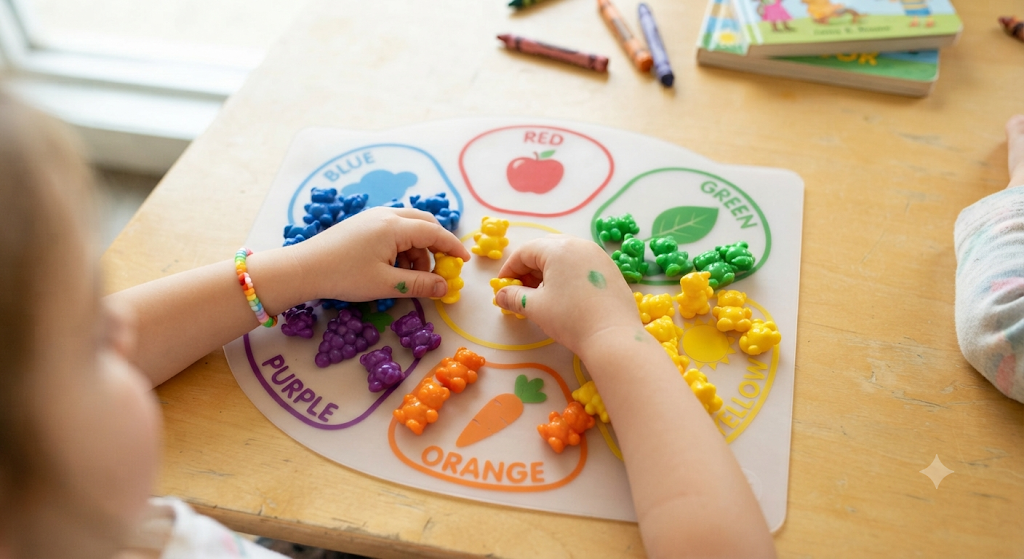
6. Counting Bears Sorting Station
- Age Group: 4–5 years
- Learning Objective: Sort and count objects by color, then compare quantities.
- Learning Outcomes: Children will count sets up to 10 and identify which set has more or fewer.
- Materials Required: Colored counting bears, sorting mats, small cups.
- Preparation: Set out one cup of mixed bears per pair of children.
- Warm-Up Activity: Sing a counting song, holding up fingers for each number.
- Main Activity (step-by-step): 1) Model sorting bears by color into mat sections. 2) Children sort their own cup of bears. 3) Count each color group aloud together. 4) Compare two groups using “more” and “fewer.” 5) Record totals on a simple tally sheet.
- Independent Practice: Children repeat the sort with a new cup independently.
- Group Activity: Combine all class totals to find the class’s favorite bear color.
- Assessment: Observe one-to-one correspondence while counting.
- Differentiation Ideas: Limit to five bears for support; introduce simple addition (“if we combine two colors, how many now?”) for advanced learners.
- Extension Activity: Graph the color totals using sticky notes on a wall chart.
- Teacher Tips: Store bears in color-coded bags to speed up cleanup.
- Home Connection Activity: Families sort laundry socks or pantry items by color and count them.
- Estimated Time: 25 minutes
- Skills Developed: Counting, one-to-one correspondence, comparison
7. Shape Hunt Around the Classroom
- Age Group: 4–6 years
- Learning Objective: Identify 2D shapes in the everyday environment.
- Learning Outcomes: Children will name and locate at least four shapes correctly.
- Materials Required: Shape cards, clipboards, crayons.
- Preparation: Review shape names and attributes (sides, corners) beforehand.
- Warm-Up Activity: Play “shape says” children form shapes with their arms.
- Main Activity (step-by-step): 1) Give each child a clipboard with a shape checklist. 2) Children walk the room finding real-world shape matches (clock = circle, door = rectangle). 3) They draw or check off each shape found. 4) Regroup to share discoveries. 5) Discuss which shape was hardest to find.
- Independent Practice: Children complete a shape-matching worksheet at their table.
- Group Activity: Build a shape city out of blocks, naming each shape used.
- Assessment: Checklist of shapes correctly identified and named.
- Differentiation Ideas: Limit to circle, square, triangle for support; add pentagon and hexagon for a challenge.
- Extension Activity: Create shape art collages using cut paper shapes.
- Teacher Tips: Post shape posters at children’s eye level for quick visual reference.
- Home Connection Activity: A “shape walk” checklist for families to complete around the neighborhood.
- Estimated Time: 25 minutes
- Skills Developed: Geometry, visual discrimination, vocabulary
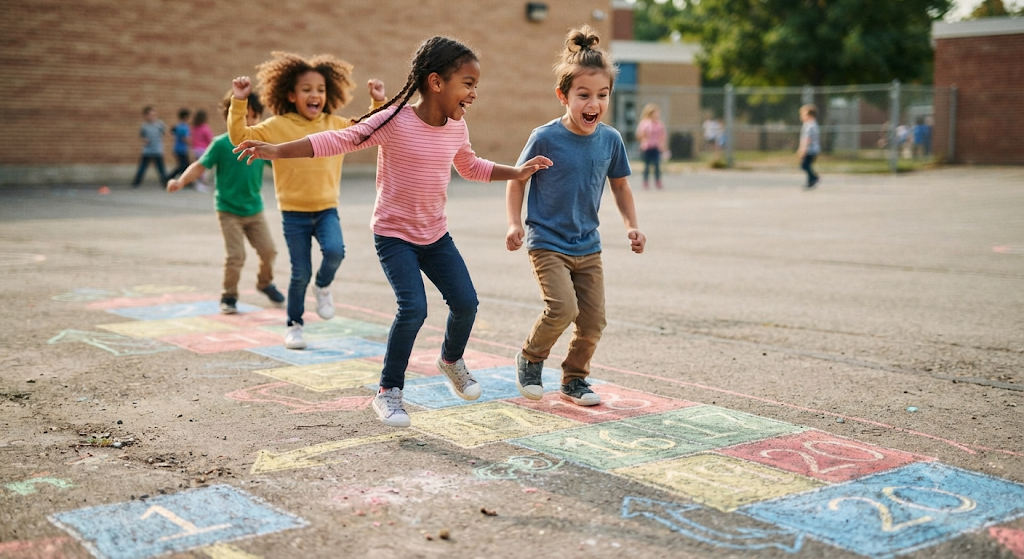
8. Number Line Hopscotch
- Age Group: 5–6 years
- Learning Objective: Practice number order and simple addition through movement.
- Learning Outcomes: Children will correctly hop to a called number and solve a simple addition problem.
- Materials Required: Chalk or tape, numbers 1–20.
- Preparation: Draw a large number line on the floor or playground.
- Warm-Up Activity: Count forward and backward together, hopping in place.
- Main Activity (step-by-step): 1) Call a starting number. 2) Child hops to that number. 3) Call a second number to add. 4) Child hops forward that many spaces and lands on the answer. 5) Whole group checks the answer together.
- Independent Practice: Children take turns creating their own simple addition hop for a partner.
- Group Activity: Team addition races along the number line.
- Assessment: Note accuracy of hops and whether the child self-corrects.
- Differentiation Ideas: Stick to counting 1–10 for support; introduce subtraction (“hop backward”) for advanced learners.
- Extension Activity: Create a paper number line for desk practice.
- Teacher Tips: This is a perfect five-minute transition activity between subjects.
- Home Connection Activity: Draw a sidewalk chalk number line at home for weekend practice.
- Estimated Time: 20 minutes
- Skills Developed: Number sense, addition, gross motor skills
9. Patterns with Colored Blocks
- Age Group: 4–6 years
- Learning Objective: Recognize, extend, and create simple AB and ABC patterns.
- Learning Outcomes: Children will extend a given pattern by at least three additional pieces.
- Materials Required: Colored unit blocks or linking cubes.
- Preparation: Set out pattern starter cards showing AB and ABC sequences.
- Warm-Up Activity: Clap a pattern (clap-stomp-clap-stomp) and have children continue it.
- Main Activity (step-by-step): 1) Show a red-blue-red-blue pattern. 2) Ask “what comes next?” 3) Children build the pattern with blocks. 4) Introduce a three-part pattern for a challenge. 5) Children create their own pattern for a partner to extend.
- Independent Practice: Complete a pattern worksheet using stickers or stamps.
- Group Activity: Build a class pattern train across the floor, each child adding one piece.
- Assessment: Observe whether the child can identify and correctly extend the pattern.
- Differentiation Ideas: Stick to two-color AB patterns for support; introduce shape-and-color combined patterns for advanced learners.
- Extension Activity: Find patterns in clothing, wallpaper, or nature photos.
- Teacher Tips: Keep a bin of loose parts (buttons, bottle caps) for pattern-making variety.
- Home Connection Activity: Families create a pattern with pantry snacks before eating them.
- Estimated Time: 20 minutes
- Skills Developed: Pattern recognition, early algebraic thinking
10. Measuring with Non-Standard Units
- Age Group: 5–6 years
- Learning Objective: Compare length using non-standard units like blocks or cubes.
- Learning Outcomes: Children will measure at least three classroom objects and record results.
- Materials Required: Linking cubes, recording sheet, pencils.
- Preparation: Choose three to five objects of varying length around the room.
- Warm-Up Activity: Compare two children’s shoes by placing them side by side which is longer?
- Main Activity (step-by-step): 1) Model measuring a book using linking cubes end to end. 2) Count and record the total. 3) Children measure their own chosen object. 4) Compare results as a group. 5) Discuss why using the same-size unit matters.
- Independent Practice: Measure three more objects independently and record on a sheet.
- Group Activity: Rank measured objects from shortest to longest as a class.
- Assessment: Check for accurate one-to-one placement of units and correct counting.
- Differentiation Ideas: Measure only one object with support; compare two objects’ difference in units for advanced learners.
- Extension Activity: Measure a partner’s arm span using cubes.
- Teacher Tips: Use uniform blocks, not mixed sizes, or measurements won’t be accurate — a common early mistake.
- Home Connection Activity: Measure furniture at home using their own footsteps.
- Estimated Time: 25 minutes
- Skills Developed: Measurement, comparison, recording data
Science & STEM
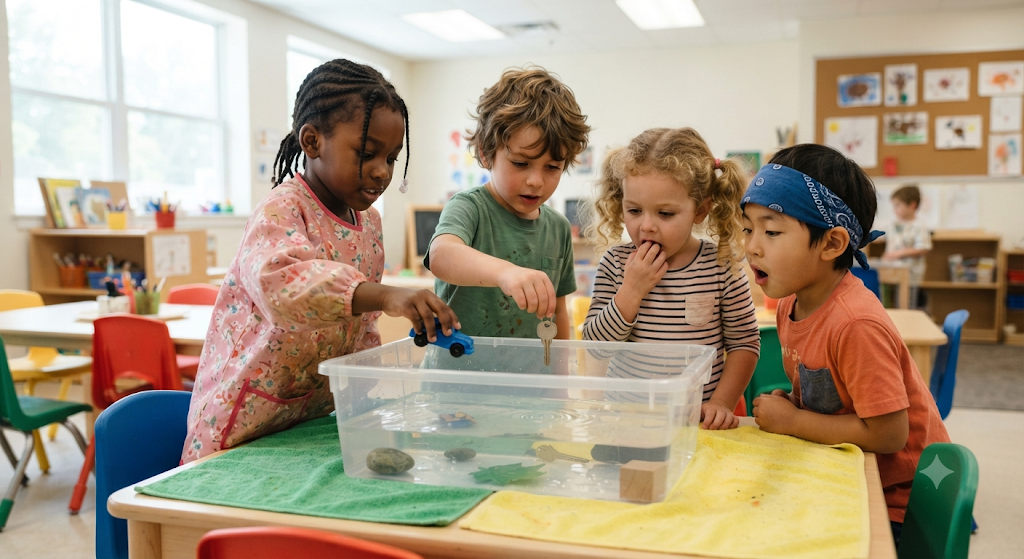
11. Sink or Float Experiment
- Age Group: 4–6 years
- Learning Objective: Predict and test whether objects sink or float in water.
- Learning Outcomes: Children will make a prediction and record the actual result for five objects.
- Materials Required: Clear bin of water, assorted small objects, recording chart, towels.
- Preparation: Choose objects with varied, non-obvious outcomes (a heavy plastic toy that floats, a small rock that sinks).
- Warm-Up Activity: Ask children to predict what happens if you drop a feather versus a rock in water.
- Main Activity (step-by-step): 1) Show each object and ask for a prediction. 2) Drop the object into the water bin. 3) Children observe and record sink or float. 4) Discuss why (weight, material, air). 5) Repeat with all objects, comparing predictions to results.
- Independent Practice: Children test two new objects from a mystery bag on their own.
- Group Activity: Sort tested objects into “sink” and “float” bins as a class.
- Assessment: Compare prediction accuracy and listen for reasoning (“it’s heavy” or “it has air inside”).
- Differentiation Ideas: Use picture symbols (thumbs up/down) for support; introduce the word “density” for advanced learners.
- Extension Activity: Test if adding foil “boats” can keep a sinking object afloat.
- Teacher Tips: Line the floor with towels first this lesson gets delightfully splashy.
- Home Connection Activity: Try the sink-or-float test during bath time with bath toys.
- Estimated Time: 30 minutes
- Skills Developed: Scientific inquiry, prediction, cause and effect
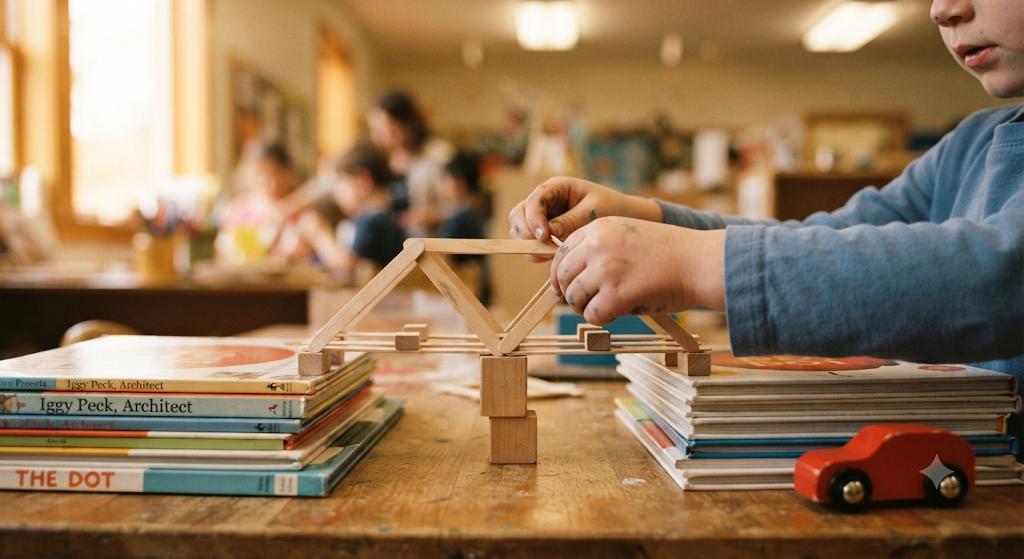
12. Building Bridges STEM Challenge
- Age Group: 5–6 years
- Learning Objective: Design and build a simple structure that supports weight.
- Learning Outcomes: Children will construct a bridge that holds a small toy car without collapsing.
- Materials Required: Craft sticks, blocks, tape, small toy cars, two stacks of books as “riverbanks.”
- Preparation: Set up two block stacks with a gap between them to represent a river.
- Warm-Up Activity: Look at photos of real bridges and discuss why they don’t collapse.
- Main Activity (step-by-step): 1) Present the challenge: build a bridge to connect the riverbanks. 2) Children plan with materials in small groups. 3) Build and test with the toy car. 4) Rebuild if the bridge fails. 5) Share and celebrate each group’s final design.
- Independent Practice: Children sketch their bridge design before building, then compare sketch to final product.
- Group Activity: Groups present their bridge and explain one thing they’d change.
- Assessment: Observe persistence, problem-solving, and successful weight-bearing.
- Differentiation Ideas: Provide a pre-cut base for support; challenge advanced learners to add a second lane or railing.
- Extension Activity: Test the bridge with progressively heavier toy cars.
- Teacher Tips: Let bridges fail that’s where the real engineering thinking happens.
- Home Connection Activity: Build a bridge at home from household items like books and a ruler.
- Estimated Time: 35 minutes
- Skills Developed: Engineering thinking, collaboration, persistence
13. Planting Seeds and Growth Journals
- Age Group: 4–6 years
- Learning Objective: Understand what a seed needs to grow and observe changes over time.
- Learning Outcomes: Children will plant a seed and record at least three observations over two weeks.
- Materials Required: Bean seeds, small clear cups, soil, water, growth journal sheets.
- Preparation: Prepare cups with soil and pre-poke a small hole for planting.
- Warm-Up Activity: Ask children what they think is inside a seed.
- Main Activity (step-by-step): 1) Show a soaked bean seed cut open. 2) Discuss the parts (seed coat, food, baby plant). 3) Children plant their own seed in a labeled cup. 4) Water and place on a sunny windowsill. 5) Set a daily observation schedule.
- Independent Practice: Children draw their seed cup daily in a growth journal.
- Group Activity: Compare growth rates across the class on a shared chart.
- Assessment: Check journal entries for detail and accuracy of observations.
- Differentiation Ideas: Use a simple three-box drawing journal for support; add measurement in centimeters for advanced learners.
- Extension Activity: Transplant the seedling to the school garden once roots appear.
- Teacher Tips: Clear cups work better than pots so roots are visible from day one.
- Home Connection Activity: Send home a seed packet for a family garden project.
- Estimated Time: 20 minutes to plant, then 5 minutes daily
- Skills Developed: Scientific observation, responsibility, patience
14. Magnet Exploration Station
- Age Group: 4–6 years
- Learning Objective: Test which materials are magnetic and which are not.
- Learning Outcomes: Children will correctly sort at least six objects as magnetic or non-magnetic.
- Materials Required: Bar magnets, a mixed tray of metal and non-metal objects, two sorting bins.
- Preparation: Gather safe, child-sized objects (paperclip, spoon, cotton ball, plastic block, coin).
- Warm-Up Activity: Ask children to guess which objects a magnet will “stick” to.
- Main Activity (step-by-step): 1) Demonstrate testing one object with the magnet. 2) Children test each object in the tray. 3) Sort into “magnetic” and “not magnetic” bins. 4) Discuss patterns noticed (most metal, not all metal). 5) Record findings on a simple chart.
- Independent Practice: Test three new mystery objects independently.
- Group Activity: Combine class results into one large tally chart.
- Assessment: Observe sorting accuracy and listen for reasoning language.
- Differentiation Ideas: Limit to four clearly magnetic/non-magnetic objects for support; introduce the word “attract” for advanced learners.
- Extension Activity: Test if a magnet works through paper or fabric.
- Teacher Tips: Remove any small magnetic parts choking hazards before independent use.
- Home Connection Activity: Send home a small magnet to test the refrigerator and kitchen items.
- Estimated Time: 25 minutes
- Skills Developed: Scientific inquiry, classification, cause and effect
15. Simple Machines: Ramps and Rollers
- Age Group: 5–6 years
- Learning Objective: Explore how ramps change the speed and distance of a rolling object.
- Learning Outcomes: Children will test at least two ramp angles and compare results.
- Materials Required: Wooden or foam ramps, toy cars or balls, measuring tape or string.
- Preparation: Set up ramps at two different heights using blocks as supports.
- Warm-Up Activity: Ask children to predict which ramp will send the ball farther.
- Main Activity (step-by-step): 1) Roll a ball down the low ramp and mark where it stops. 2) Roll it down the steep ramp and mark that point. 3) Compare distances with string or tape. 4) Discuss why the steeper ramp sent it farther. 5) Let children test their own ramp height combinations.
- Independent Practice: Children record which ramp height sent the ball the farthest on a simple worksheet.
- Group Activity: Class vote and test: whose ramp design goes the farthest?
- Assessment: Observe whether the child can explain the relationship between ramp height and distance.
- Differentiation Ideas: Use only two ramp settings for support; add a “how many blocks tall” measurement task for advanced learners.
- Extension Activity: Build a marble run using recycled tubes and cardboard.
- Teacher Tips: This lesson works beautifully as an outdoor learning station on a nice day.
- Home Connection Activity: Build a ramp at home with a cutting board and books.
- Estimated Time: 30 minutes
- Skills Developed: Physics concepts, prediction, measurement
Art & Music
16. Mixing Primary Colors Art Lab
- Age Group: 4–6 years
- Learning Objective: Discover which primary colors combine to make secondary colors.
- Learning Outcomes: Children will correctly name at least two color combinations and their results.
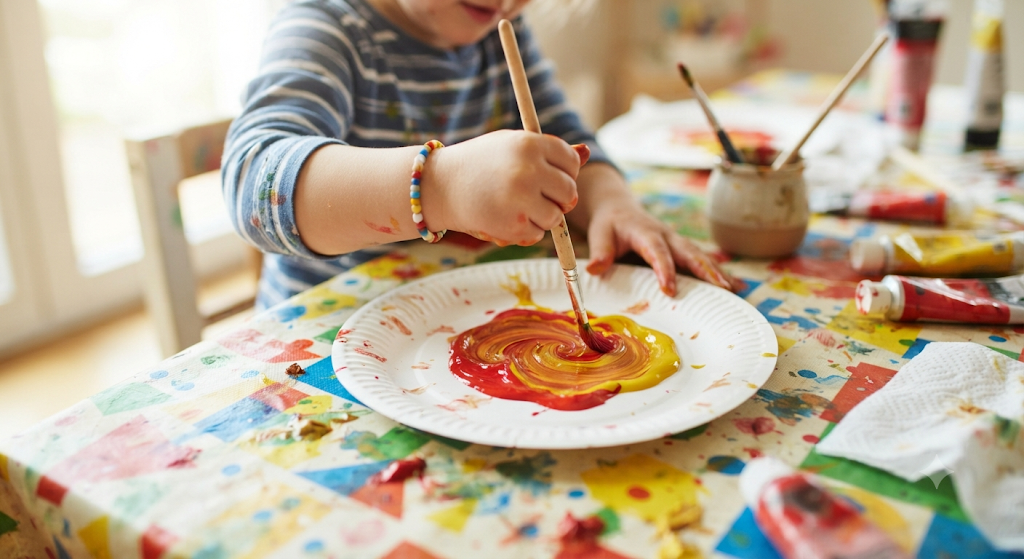
- Materials Required: Red, yellow, blue paint, paper plates, paintbrushes, white paper.
- Preparation: Pour small amounts of each primary color onto paper plates.
- Warm-Up Activity: Sing a color-naming song, pointing to objects of each color in the room.
- Main Activity (step-by-step): 1) Show the three primary colors and name them. 2) Predict what happens when two are mixed. 3) Children mix red and yellow on paper. 4) Repeat with blue and yellow, then red and blue. 5) Label each new color created.
- Independent Practice: Children create a free-choice painting using only mixed colors.
- Group Activity: Build a class color wheel by combining everyone’s mixed-color samples.
- Assessment: Check whether the child can predict a mixing outcome before testing it.
- Differentiation Ideas: Pre-name colors and outcomes for support; introduce white and black to explore tints and shades for advanced learners.
- Extension Activity: Read a color-mixing picture book and connect vocabulary.
- Teacher Tips: Smocks and newspaper-covered tables save serious laundry time.
- Home Connection Activity: Mix food coloring in water cups at home to repeat the experiment.
- Estimated Time: 30 minutes
- Skills Developed: Color theory, fine motor skills, prediction
17. Musical Instrument Exploration
- Age Group: 4–6 years
- Learning Objective: Distinguish between different sounds and rhythms using classroom instruments.
- Learning Outcomes: Children will identify at least three instruments by sound alone.
- Materials Required: Simple percussion instruments (shakers, drums, bells, sticks).
- Preparation: Arrange instruments in a circle, one per child if possible.
- Warm-Up Activity: Clap a simple rhythm and have children echo it back.
- Main Activity (step-by-step): 1) Introduce each instrument’s name and sound. 2) Play a “guess the instrument” game with eyes closed. 3) Children take turns playing a simple rhythm pattern. 4) Combine instruments to create a class “song.” 5) Discuss loud versus soft and fast versus slow.
- Independent Practice: Children experiment freely with one instrument at a center.
- Group Activity: Perform a simple rhythm pattern together as a class band.
- Assessment: Note whether the child can identify instruments by sound and follow a rhythm.
- Differentiation Ideas: Use fewer, more distinct instrument sounds for support; introduce rhythm notation cards for advanced learners.
- Extension Activity: Make homemade shakers from recycled bottles and rice.
- Teacher Tips: Set clear “instruments down” hand signals before starting otherwise it gets loud fast.
- Home Connection Activity: Families make a shaker instrument together from a container at home.
- Estimated Time: 25 minutes
- Skills Developed: Auditory discrimination, rhythm, self-expression
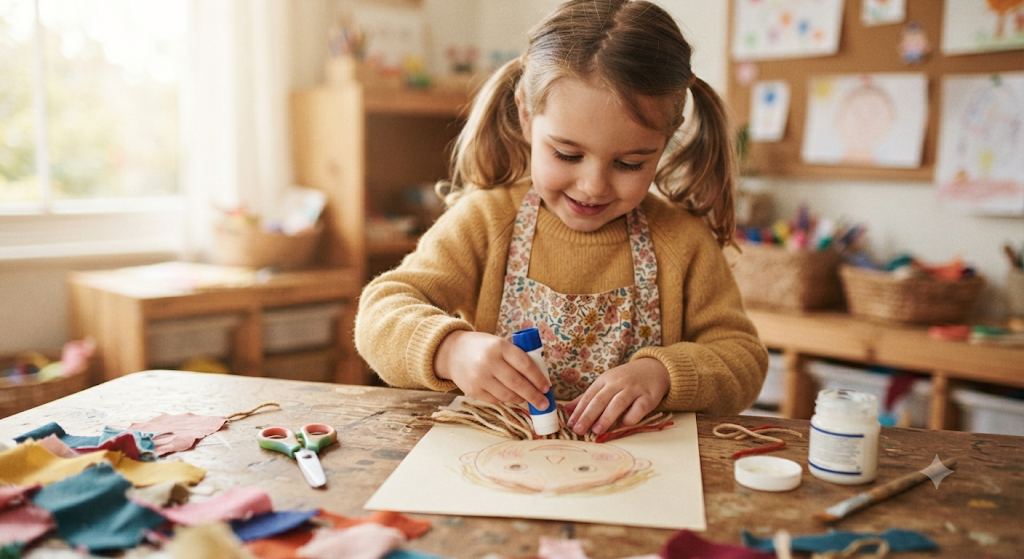
18. Collage Self-Portraits
- Age Group: 4–6 years
- Learning Objective: Represent self-identity through art using varied materials.
- Learning Outcomes: Children will create a self-portrait including at least four identifying features.
- Materials Required: Mirrors, construction paper, yarn, fabric scraps, glue, scissors.
- Preparation: Set up a small mirror station for children to reference their features.
- Warm-Up Activity: Discuss what makes each person unique hair color, eye color, favorite things.
- Main Activity (step-by-step): 1) Children look in the mirror and describe their features aloud. 2) Cut a face shape from construction paper. 3) Add yarn for hair, fabric for clothing. 4) Draw or add facial features. 5) Label the portrait with their name.
- Independent Practice: Write or dictate one sentence describing themselves next to the portrait.
- Group Activity: Create a “Our Class” bulletin board display with all portraits together.
- Assessment: Check for inclusion of key identifying features and pride in the finished piece.
- Differentiation Ideas: Provide pre-cut face shapes for support; encourage adding background details (favorite activity) for advanced learners.
- Extension Activity: Write a class book called “All About Us” using each portrait and sentence.
- Teacher Tips: Keep a mirror in the art center year-round children return to self-portraits often.
- Home Connection Activity: Ask families to share a photo of the child for comparison and discussion.
- Estimated Time: 35 minutes
- Skills Developed: Self-identity, fine motor skills, social-emotional awareness
Social-Emotional Learning & Life Skills
19. Feelings Faces Circle Time
- Age Group: 4–6 years
- Learning Objective: Identify and name basic emotions using facial cues.
- Learning Outcomes: Children will correctly name at least four emotions from picture cards.
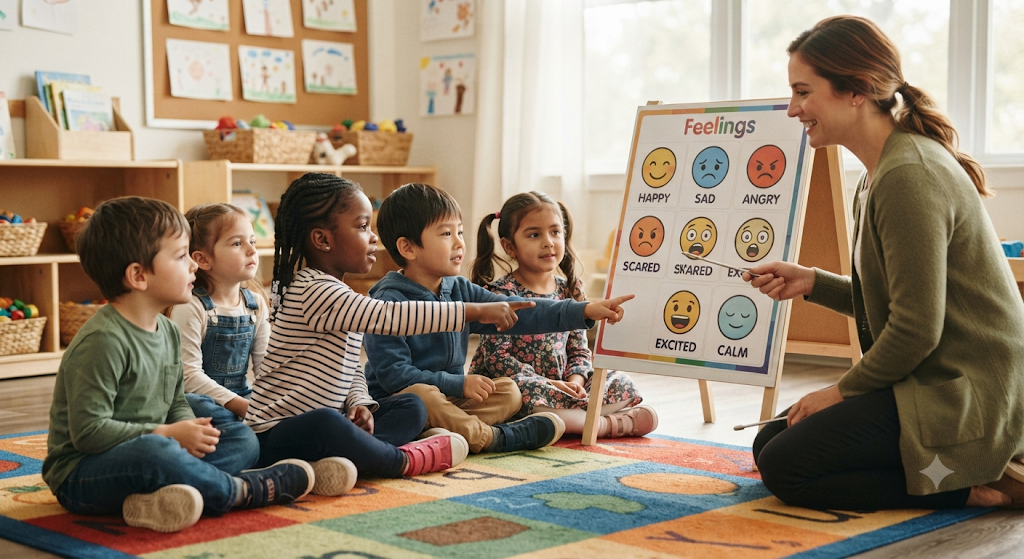
- Materials Required: Feelings face cards or a feelings chart, a mirror, a soft toy.
- Preparation: Print or laminate cards showing happy, sad, angry, scared, surprised, and calm faces.
- Warm-Up Activity: Children make silly faces in a mirror and guess each other’s emotion.
- Main Activity (step-by-step): 1) Hold up a feelings card and name the emotion. 2) Ask children to make that face themselves. 3) Discuss a time they felt that way. 4) Pass a soft toy around so each child shares briefly. 5) Introduce one calming strategy (deep breaths) for big feelings.
- Independent Practice: Children point to how they feel today on a classroom feelings chart.
- Group Activity: Act out a short scenario and guess which feeling matches.
- Assessment: Observe whether the child can label their own emotion accurately.
- Differentiation Ideas: Start with only two contrasting emotions for support; discuss mixed or changing feelings for advanced learners.
- Extension Activity: Read a picture book about a character managing a big feeling.
- Teacher Tips: Revisit the feelings chart daily during morning meeting consistency builds emotional vocabulary fast.
- Home Connection Activity: Families use the same feelings chart at home during dinner check-ins.
- Estimated Time: 20 minutes
- Skills Developed: Emotional vocabulary, self-awareness, empathy
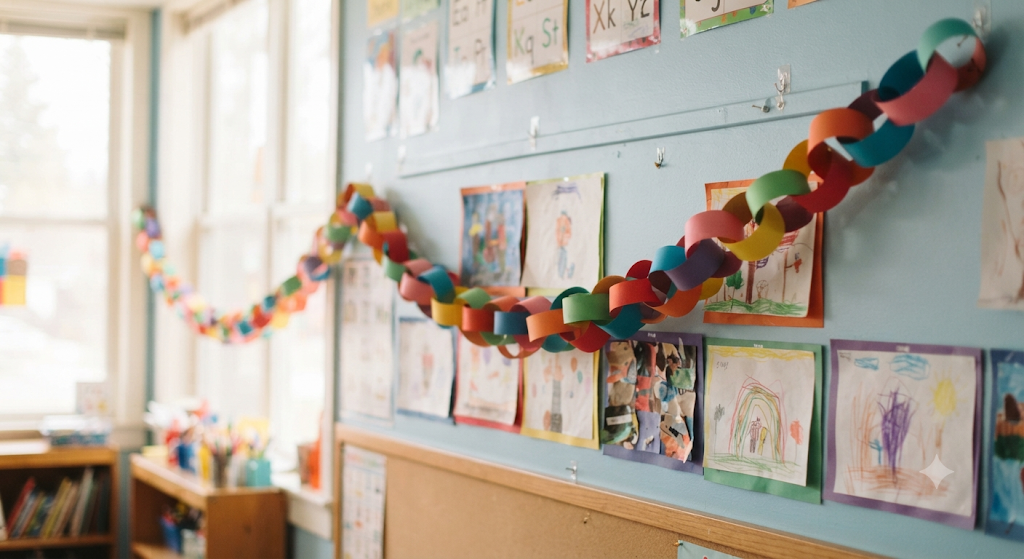
20. Kindness Chain Challenge
- Age Group: 4–6 years
- Learning Objective: Recognize and practice acts of kindness within the classroom community.
- Learning Outcomes: Children will identify and perform at least one kind act during the day.
- Materials Required: Construction paper strips, stapler or tape, markers.
- Preparation: Cut colorful paper strips ahead of time for the chain.
- Warm-Up Activity: Discuss what kindness looks like and sounds like with examples.
- Main Activity (step-by-step): 1) Brainstorm a class list of kind actions. 2) Each child writes or draws one act of kindness on a strip. 3) Link strips into a growing paper chain. 4) Hang the chain in the classroom. 5) Add a new link each time a kind act is noticed.
- Independent Practice: Children look for one kind act to do during free choice time.
- Group Activity: Share kindness stories at the end of the day and add new chain links together.
- Assessment: Observe and note specific kind behaviors throughout the day.
- Differentiation Ideas: Offer picture prompts for support; ask advanced learners to describe how kindness made someone feel.
- Extension Activity: Set a class goal to reach a chain length by the end of the month.
- Teacher Tips: Celebrate the chain publicly visible progress motivates continued kindness.
- Home Connection Activity: Families start their own mini kindness chain at home.
- Estimated Time: 25 minutes, ongoing throughout the week
- Skills Developed: Empathy, community-building, self-regulation
21. Community Helpers Role Play
- Age Group: 4–6 years
- Learning Objective: Understand the roles different community helpers play.
- Learning Outcomes: Children will name the job and one tool used by at least three community helpers.
- Materials Required: Dress-up props (hat, stethoscope, toolbelt), picture cards of community helpers.
- Preparation: Set up a dramatic play area with helper-themed props.
- Warm-Up Activity: Show pictures of a firefighter, doctor, and mail carrier and ask what they do.
- Main Activity (step-by-step): 1) Introduce one community helper and their tools. 2) Children take turns role-playing that helper. 3) Discuss how the helper serves the community. 4) Rotate through two more helper roles. 5) Reflect together on how each job helps people.
- Independent Practice: Children draw a picture of the community helper they’d like to be.
- Group Activity: Perform a short group skit showing helpers working together.
- Assessment: Check whether children can name the helper’s role and one related tool.
- Differentiation Ideas: Use picture-only prompts for support; discuss training or education needed for each job for advanced learners.
- Extension Activity: Invite a real community helper to visit the classroom.
- Teacher Tips: Rotate the dramatic play props monthly to keep this center fresh all year.
- Home Connection Activity: Families discuss a helper they interacted with that week.
- Estimated Time: 30 minutes
- Skills Developed: Social studies, vocabulary, empathy, dramatic play
22. Simple Sandwich-Making Life Skills
- Age Group: 5–6 years
- Learning Objective: Follow a multi-step sequence to complete a simple task independently.
- Learning Outcomes: Children will complete all steps of making a sandwich in the correct order.
- Materials Required: Bread, spreadable topping, butter knives (child-safe), plates, napkins.
- Preparation: Wash tables and set up a hygiene routine (handwashing) before starting.
- Warm-Up Activity: Discuss why we wash hands before handling food.
- Main Activity (step-by-step): 1) Show a numbered picture sequence for making a sandwich. 2) Model each step slowly. 3) Children spread topping on their own bread. 4) Fold or top the sandwich. 5) Clean their own space afterward.
- Independent Practice: Children repeat the sequence with a different topping choice.
- Group Activity: Share and describe their sandwich to a table partner.
- Assessment: Observe sequencing accuracy and independence level.
- Differentiation Ideas: Pre-spread the topping for support; add a second ingredient layer for advanced learners.
- Extension Activity: Create a picture recipe book of favorite simple snacks.
- Teacher Tips: Check allergy lists carefully before choosing ingredients.
- Home Connection Activity: Children help make their own lunch at home over the weekend.
- Estimated Time: 25 minutes
- Skills Developed: Sequencing, independence, fine motor skills
Movement, Sensory & Outdoor Learning
23. Animal Movement Yoga
- Age Group: 4–6 years
- Learning Objective: Follow multi-step movement directions while building body awareness.
- Learning Outcomes: Children will correctly imitate at least five animal poses.
- Materials Required: Yoga mats or carpet squares, animal pose picture cards.
- Preparation: Clear an open floor space for movement.
- Warm-Up Activity: Take three deep “belly breaths” together to settle the group.
- Main Activity (step-by-step): 1) Introduce one animal pose at a time (cat, dog, snake, frog, butterfly). 2) Demonstrate and hold each pose for a slow count of five. 3) Children copy the pose and the matching animal sound. 4) Flow through all poses in sequence. 5) End with a calm “resting turtle” pose.
- Independent Practice: Children choose their own favorite animal pose to show the group.
- Group Activity: Create a class “animal parade” moving through the poses together.
- Assessment: Observe balance, following directions, and body control.
- Differentiation Ideas: Offer seated versions of poses for support; add a balance challenge (hold pose for longer) for advanced learners.
- Extension Activity: Make up a brand-new animal pose as a class.
- Teacher Tips: This is an excellent transition activity after lunch to reset energy levels.
- Home Connection Activity: Families try three animal poses together before bedtime.
- Estimated Time: 15 minutes
- Skills Developed: Gross motor skills, body awareness, self-regulation
24. Sensory Bin: Ocean Exploration
- Age Group: 4–6 years
- Learning Objective: Explore textures and vocabulary related to ocean life through sensory play.
- Learning Outcomes: Children will name at least three ocean creatures found in the bin.
- Materials Required: Large bin, blue-dyed rice or water beads, small sea creature toys, scoops, tongs.
- Preparation: Prepare the sensory base and hide ocean creature toys inside.
- Warm-Up Activity: Look at pictures of ocean animals and predict what might be hidden in the bin.
- Main Activity (step-by-step): 1) Introduce the sensory bin and its rules (stay over the bin). 2) Children use scoops and tongs to search. 3) Name each creature found aloud. 4) Sort creatures by size or type. 5) Discuss where each creature lives in the ocean.
- Independent Practice: Children free-explore the bin at a sensory center during choice time.
- Group Activity: Create a class ocean mural featuring all discovered creatures.
- Assessment: Note vocabulary used and fine motor control with tools.
- Differentiation Ideas: Use fewer, larger creatures for support; add ocean habitat vocabulary (coral, kelp, current) for advanced learners.
- Extension Activity: Research one ocean creature in more depth as a mini class project.
- Teacher Tips: Lay a fitted sheet under the bin for painless cleanup of stray rice.
- Home Connection Activity: Families build a mini sensory bin at home with kitchen rice or pasta.
- Estimated Time: 30 minutes
- Skills Developed: Sensory processing, vocabulary, fine motor skills
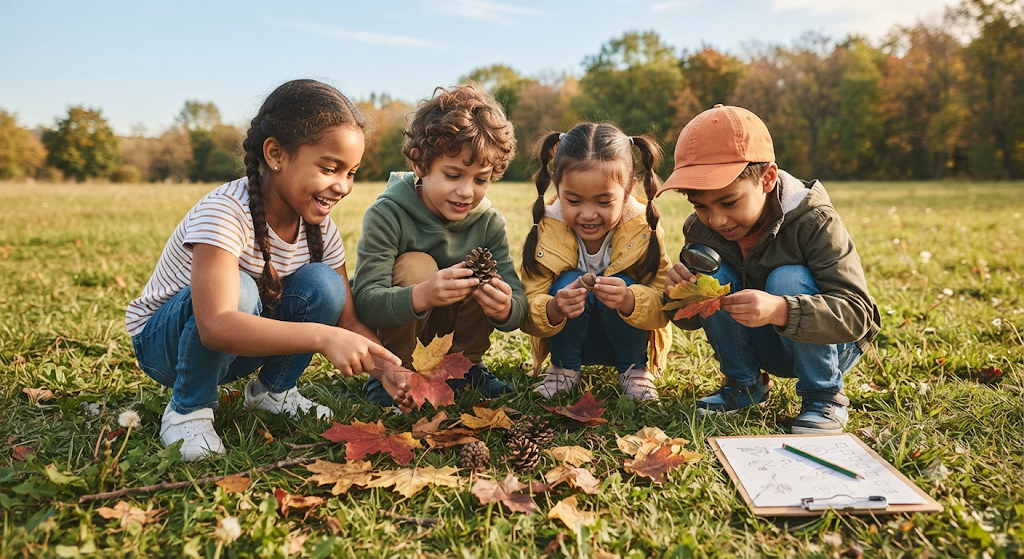
25. Nature Walk Scavenger Hunt
- Age Group: 4–6 years
- Learning Objective: Observe and describe natural objects using descriptive vocabulary.
- Learning Outcomes: Children will find and describe at least five natural items on a checklist.
- Materials Required: Nature scavenger hunt checklist, clipboards, small bags for collecting.
- Preparation: Create a simple picture checklist (leaf, rock, stick, flower, pinecone).
- Warm-Up Activity: Discuss outdoor safety rules and what “gentle hands” with nature means.
- Main Activity (step-by-step): 1) Review the checklist items together. 2) Walk the school grounds in pairs. 3) Children check off or collect found items. 4) Regroup and share one interesting find each. 5) Discuss textures, colors, and smells noticed.
- Independent Practice: Children sort their collected items by category back in the classroom.
- Group Activity: Build a nature collage or display table with all found items.
- Assessment: Note descriptive vocabulary used and checklist completion.
- Differentiation Ideas: Use a picture-only checklist for support; ask advanced learners to write one describing word per item.
- Extension Activity: Press and preserve a leaf or flower for the class nature journal.
- Teacher Tips: Check the grounds ahead of time for any hazards like broken glass or poison ivy.
- Home Connection Activity: Families take their own neighborhood nature walk over the weekend.
- Estimated Time: 35 minutes
- Skills Developed: Observation, descriptive vocabulary, gross motor skills
26. Water Table Pouring and Measuring
- Age Group: 4–5 years
- Learning Objective: Explore volume and capacity concepts through pouring.
- Learning Outcomes: Children will correctly compare which container holds more or less water.
- Materials Required: Water table or large bin, containers of varying sizes, funnels, towels.
- Preparation: Fill the water table and set out three to four different-sized containers.
- Warm-Up Activity: Hold up two containers and ask children to predict which holds more.
- Main Activity (step-by-step): 1) Demonstrate pouring water from one container to another. 2) Children experiment pouring between containers. 3) Ask which container filled up fastest. 4) Compare full versus empty, more versus less. 5) Introduce the funnel for a fine motor challenge.
- Independent Practice: Children continue free exploration at the water table station.
- Group Activity: Race to fill the largest container using only the smallest cup.
- Assessment: Observe vocabulary use (more, less, full, empty) and pouring control.
- Differentiation Ideas: Use only two containers for support; introduce measuring cups with numbers for advanced learners.
- Extension Activity: Repeat the activity using dry sensory materials like sand or beans.
- Teacher Tips: Roll up sleeves and lay towels down before starting this gets wonderfully messy.
- Home Connection Activity: Practice pouring and measuring together during bath time.
- Estimated Time: 25 minutes
- Skills Developed: Volume concepts, fine motor skills, vocabulary
Additional Cross-Curricular Favorites
27. Weather Watcher Journal
- Age Group: 4–6 years
- Learning Objective: Observe and record daily weather patterns using simple vocabulary.
- Learning Outcomes: Children will correctly identify and record the day’s weather for one week.
- Materials Required: Weather journal sheets, weather symbol stickers or stamps, a window view.
- Preparation: Prepare a week’s worth of simple weather journal pages.
- Warm-Up Activity: Look out the window together and describe what’s happening in the sky.
- Main Activity (step-by-step): 1) Introduce weather vocabulary (sunny, cloudy, rainy, windy, snowy). 2) Model recording today’s weather in the journal. 3) Children add the matching symbol to their own page. 4) Discuss how weather affects what we wear or do outside. 5) Predict tomorrow’s weather together.
- Independent Practice: Children complete their journal entry independently each morning.
- Group Activity: Build a class weather graph tracking the whole month.
- Assessment: Check accuracy of weather observation and recording over the week.
- Differentiation Ideas: Use symbol stamps only for support; add temperature estimation (hot, cold, warm) for advanced learners.
- Extension Activity: Discuss seasonal changes using the month’s weather graph data.
- Teacher Tips: Make this the very first task of morning meeting it builds a lovely daily routine.
- Home Connection Activity: Families check the weather forecast together each evening.
- Estimated Time: 10 minutes daily
- Skills Developed: Observation, vocabulary, data recording
28. Class Pet Care Responsibility Chart
- Age Group: 5–6 years
- Learning Objective: Understand responsibility through caring for a classroom pet or plant.
- Learning Outcomes: Children will complete an assigned care task correctly and independently.
- Materials Required: Classroom pet or plant, responsibility chart, name clips or cards.
- Preparation: Set up a rotating job chart with clear picture instructions for each task.
- Warm-Up Activity: Discuss what living things need to stay healthy.
- Main Activity (step-by-step): 1) Introduce the classroom pet or plant and its needs. 2) Explain each job on the chart (feeding, watering, checking water level). 3) Assign jobs and demonstrate each one. 4) Children complete their assigned task under supervision. 5) Rotate jobs the following week.
- Independent Practice: Children complete their job independently once trained.
- Group Activity: Discuss as a class how the pet or plant changed that week.
- Assessment: Observe follow-through and care quality on assigned tasks.
- Differentiation Ideas: Pair with a buddy for support; give advanced learners a research task about the pet’s natural habitat.
- Extension Activity: Keep a class observation journal documenting growth or behavior changes.
- Teacher Tips: Choose low-maintenance options (a betta fish or a hardy plant) for classroom sustainability.
- Home Connection Activity: Families care for a houseplant together at home for a week.
- Estimated Time: 10 minutes daily
- Skills Developed: Responsibility, empathy, life skills
29. Sound Walk Listening Activity
- Age Group: 4–6 years
- Learning Objective: Practice active listening and identify different environmental sounds.
- Learning Outcomes: Children will identify and describe at least four distinct sounds heard.
- Materials Required: None required; optional clipboard and simple sound checklist.
- Preparation: Choose a quiet outdoor or hallway route for the walk.
- Warm-Up Activity: Sit silently for 30 seconds in the classroom and share one sound noticed.
- Main Activity (step-by-step): 1) Explain the “listening ears on, mouths quiet” rule. 2) Walk the chosen route slowly. 3) Pause at intervals and ask children to name a sound they hear. 4) Record or discuss each sound. 5) Return and compare sounds heard indoors versus outdoors.
- Independent Practice: Children draw a picture of their favorite sound from the walk.
- Group Activity: Create a class list categorizing sounds as loud, soft, natural, or made by people.
- Assessment: Observe listening focus and the specificity of sound descriptions.
- Differentiation Ideas: Offer a simple picture checklist for support; ask advanced learners to guess the sound’s source before revealing it.
- Extension Activity: Create sound effects for a favorite story using classroom objects.
- Teacher Tips: This activity works beautifully as a calming reset after a high-energy lesson.
- Home Connection Activity: Families do a two-minute silent listening walk together at home.
- Estimated Time: 20 minutes
- Skills Developed: Active listening, descriptive vocabulary, self-regulation
30. Friendship Puzzle Piece Craft
- Age Group: 4–6 years
- Learning Objective: Understand that everyone contributes a unique piece to the classroom community.
- Learning Outcomes: Children will decorate their own puzzle piece and explain what makes them unique.
- Materials Required: Pre-cut cardboard puzzle pieces (one per child, designed to interlock), markers, glue, decorative materials.
- Preparation: Cut a large puzzle template into one piece per child ahead of time.
- Warm-Up Activity: Discuss how a puzzle isn’t complete if even one piece is missing.
- Main Activity (step-by-step): 1) Give each child their own puzzle piece. 2) Children decorate it to represent something unique about themselves. 3) Share their piece and its meaning with a partner. 4) Assemble all pieces together into the full class puzzle. 5) Display the finished puzzle in the classroom.
- Independent Practice: Children write or dictate one sentence about their piece for a class caption book.
- Group Activity: Take a class photo standing around the assembled puzzle.
- Assessment: Observe participation and the child’s ability to articulate what makes them unique.
- Differentiation Ideas: Offer sticker decorations for support; ask advanced learners to write a full sentence independently.
- Extension Activity: Revisit the puzzle throughout the year, adding new pieces for new students.
- Teacher Tips: This makes a wonderful first-week-of-school activity to build classroom community early.
- Home Connection Activity: Families discuss what makes their child a “unique piece” of their family.
- Estimated Time: 30 minutes
- Skills Developed: Self-esteem, community-building, fine motor skills
How to Adapt These Lesson Plans for Different Learning Levels
No two kindergarten classrooms look alike, and no single version of a lesson will fit every child in the room. Here’s how to stretch or scaffold the ideas above.
For advanced learners:
- Add an extra step of complexity, such as writing instead of drawing, or introducing a related vocabulary word.
- Ask “why” and “what if” questions rather than “what” questions to push deeper thinking.
- Offer a leadership role, like helping demonstrate a step to the rest of the group.
For children needing additional support:
- Break multi-step activities into two or three smaller steps with a visual checklist.
- Pair with a peer buddy for modeling and encouragement.
- Reduce the materials or choices offered at once to avoid overwhelm.
For English language learners:
- Pair every new vocabulary word with a picture or physical gesture.
- Preview key vocabulary before the lesson begins, using their home language where possible.
- Allow extra processing time before expecting a verbal response, and accept pointing or gesturing as valid participation.
This kind of flexible, differentiated instruction reflects guidance from organizations like the American Academy of Pediatrics on meeting the developmental needs of the whole child, not just the “average” learner in the room.
Common Lesson Planning Mistakes Teachers Should Avoid
Even experienced teachers fall into these traps. Here’s how to sidestep them.
- Packing too much into one lesson. If a lesson has more than one true objective, it’s really two lessons. Split it up.
- Skipping the warm-up. A 30-second warm-up primes attention and dramatically improves how well children absorb the main activity.
- Forgetting materials prep. Nothing derails a lesson faster than hunting for scissors mid-activity. Prep everything the night before.
- Ignoring transition time. Underestimating how long it takes 20 five-year-olds to move from the rug to tables is one of the most common planning errors always add a buffer.
- Skipping assessment. Even an informal thumbs-up check tells you who needs a small group follow-up tomorrow.
- Not planning for early finishers. Always have a quiet extension activity ready so early finishers don’t disrupt others.
Frequently Asked Questions
How do you write a kindergarten lesson plan?
Start with one clear learning objective, then work backward: choose materials, plan a short warm-up, outline the main activity step-by-step, and add a quick way to check understanding at the end.
What should a kindergarten lesson include?
A strong lesson includes a learning objective, a warm-up, a hands-on main activity, independent or group practice, an assessment method, and differentiation options for different skill levels.
How long should a kindergarten lesson be?
Most kindergarten lessons run 15 to 30 minutes, since five-year-olds typically sustain focus for about 10 to 15 minutes on any single task before needing a change of pace.
How can I make lessons more engaging?
Add movement, choice, and hands-on materials wherever possible. A lesson that asks children to build, sort, sing, or act something out will almost always outperform one built entirely around sitting and listening.
What are the best play-based lesson ideas?
Sensory bins, dramatic play centers, block building challenges, and outdoor scavenger hunts are reliable favorites because they combine academic goals with genuine, child-led exploration.
How do I assess kindergarten students?
Use informal, ongoing methods: observation checklists, work samples, and simple thumbs-up/thumbs-down checks work better for this age group than formal tests.
How many lesson plans do I need for a week?
Most kindergarten teachers plan five to eight short lessons per week across literacy, math, and one or two additional subjects like science, art, or social-emotional learning.
What is the difference between a kindergarten and preschool lesson plan?
Kindergarten lessons generally include more academic structure, such as formal letter and number instruction, while preschool lessons weigh more heavily toward open-ended play and social skill-building.
How do I differentiate a kindergarten lesson for mixed skill levels?
Plan one core activity with a simplified on-ramp for children needing support and a natural extension for advanced learners, so every child works toward the same objective at their own level.
Where can I find free kindergarten lesson plans?
Look for lesson plans from trusted early education sites, teacher resource blogs, and organizations focused on developmentally appropriate practice, and adapt them to your own classroom’s needs and materials.
Conclusion
Great kindergarten teaching isn’t about having the fanciest materials or the most elaborate Pinterest-worthy setup it’s about consistently offering lessons that are purposeful, hands-on, and genuinely fun. These 30 lesson plan ideas for kindergarten are designed to save you planning time while still meeting real learning objectives across literacy, math, science, art, movement, and social-emotional growth.
Take what fits your classroom, adapt what doesn’t, and don’t be afraid to swap materials based on what you already have on hand. Bookmark this page so you have a ready bank of ideas every time Sunday night planning rolls around, and explore the related activity guides linked throughout for even more classroom-ready resources.
Weekly Kindergarten Lesson Plan Template
Teacher: ____________________ Week of: ____________________
Weekly Overview
| Subject Focus | Learning Objective | Key Materials |
| Literacy | ||
| Math | ||
| Science / STEM | ||
| Art / Music | ||
| Social-Emotional |
Monday
- Subject: ____________________
- Learning Objective: ____________________
- Warm-Up: ____________________
- Main Activity: ____________________
- Materials Needed: ____________________
- Assessment / Notes: ____________________
Tuesday
- Subject: ____________________
- Learning Objective: ____________________
- Warm-Up: ____________________
- Main Activity: ____________________
- Materials Needed: ____________________
- Assessment / Notes: ____________________
Wednesday
- Subject: ____________________
- Learning Objective: ____________________
- Warm-Up: ____________________
- Main Activity: ____________________
- Materials Needed: ____________________
- Assessment / Notes: ____________________
Thursday
- Subject: ____________________
- Learning Objective: ____________________
- Warm-Up: ____________________
- Main Activity: ____________________
- Materials Needed: ____________________
- Assessment / Notes: ____________________
Friday
- Subject: ____________________
- Learning Objective: ____________________
- Warm-Up: ____________________
- Main Activity: ____________________
- Materials Needed: ____________________
- Assessment / Notes: ____________________
Center Rotations This Week
| Center | Focus Skill | Materials |
| Literacy Center | ||
| Math Center | ||
| Science / Sensory Center | ||
| Art Center | ||
| Dramatic Play Center |
Students Needing Follow-Up This Week
| Student | Skill to Revisit | Support Strategy |
Daily Lesson Planning Checklist
Use this checklist before teaching any kindergarten lesson to make sure it’s ready to go.
Before the Lesson
- [ ] I have one clear, kid-friendly learning objective written down.
- [ ] All materials are gathered, counted, and within reach.
- [ ] I’ve planned a warm-up activity to prime attention (30–60 seconds).
- [ ] I know exactly how I’ll transition children into and out of this activity.
- [ ] I’ve planned for early finishers with a quiet extension task.
- [ ] I’ve identified one differentiation strategy for children needing extra support.
- [ ] I’ve identified one extension idea for advanced learners.
- [ ] I’ve checked for allergies or safety concerns if the lesson involves food or materials.
- [ ] I have a simple way to assess understanding (checklist, observation, or work sample).
- [ ] I’ve noted a home connection activity to send with students, if applicable.
During the Lesson
- [ ] I stated the objective in child-friendly language at the start.
- [ ] Children were actively engaged within the first few minutes.
- [ ] I checked in with children needing extra support individually.
- [ ] I noted which children may need a small-group follow-up tomorrow.
After the Lesson
- [ ] I recorded quick observation notes while they’re fresh.
- [ ] I noted what worked well and what I’d change next time.
- [ ] I reset and restocked materials for the next use.
- [ ] I flagged any students who need a follow-up small group or 1:1 check-in.
Weekly Reflection (Fill Out on Friday)
- What was the most engaging lesson this week? ____________________
- What lesson needs the most adjustment before reusing it? ____________________
- Which students need extra attention next week? ____________________
- What materials do I need to restock or prep? ____________________