
Discover key speech and language development milestones, warning signs of delay, and expert strategies to support early childhood communication skills.
Speech and Language Development
in Early Years
A comprehensive guide for parents, nursery practitioners, and early years educators covering milestones, warning signs, and practical strategies to nurture every child’s voice.
Few things are quite as remarkable as watching a child find their voice. From the instinctive cries of a newborn to the breathless storytelling of a four-year-old, speech and language development in early years is one of the most extraordinary journeys in human development. And the stakes are genuinely high. How well a child develops communication skills in those first five years shapes not only how they express themselves, but how they think, learn, form friendships, and engage with the world around them.
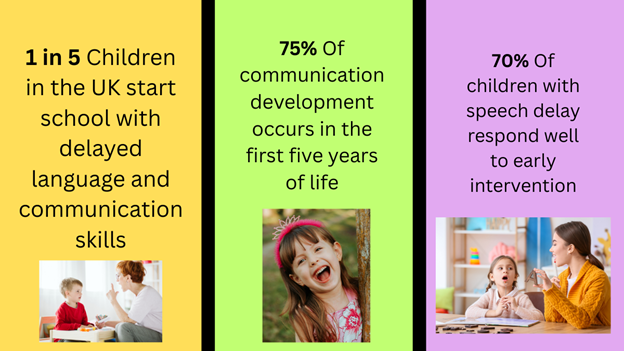
Research consistently shows that children who arrive at school with a strong foundation in language are better equipped for literacy, numeracy, and social integration. Conversely, unaddressed speech and language delay can create lasting barriers to educational achievement and emotional wellbeing. The good news? With the right support at home, in the nursery, and in the preschool classroom every child can be given the best possible start.
This guide draws on current evidence and everyday early years practice to give you clear, actionable insight into how children develop communication skills, what to watch for, and how to create the conditions in which language can flourish.
What Speech and Language Development in Early Years actually Means?
These two terms get used interchangeably, but they describe distinct though deeply connected aspects of communication. Understanding the difference lets you support children far more precisely.
Speech refers to the physical, mechanical act of producing sounds: how clearly and accurately a child articulates words. It involves the coordination of the lips, tongue, teeth, jaw, and breath. A child with a speech difficulty might be hard to understand, even when their ideas are fully formed.
Language is the system of meaning behind those sounds. It encompasses:
Vocabulary — the words a child knows and uses
Grammar — how they structure sentences
Receptive language — how well they understand what others say
Expressive language — how effectively they communicate their own thoughts and needs
A child can have perfectly clear speech but struggle to formulate sentences. Conversely, a child can have rich comprehension and a sophisticated grasp of language but real difficulties with pronunciation. Both dimensions matter enormously to early childhood communication development, and each requires different types of support.
What’s worth understanding from the outset is that child language acquisition is a natural, largely self-directed process — but it doesn’t happen in a vacuum. Children learn to communicate through immersion: listening, observing, imitating, and experimenting within relationships that respond to them. Every smile exchanged between a baby and a caregiver, every “ooh” answered with another “ooh”, lays neurological groundwork for the language that follows. Communication begins long before the first word.
Why Early Language Development Has Lifelong Consequences
Cognitive Development
Language is the scaffolding of thought. As children acquire words and grammar, they gain the tools to categorise, reason, and reflect. A child who can describe what they see, ask questions, and make predictions is actively building cognitive architecture that will serve them throughout their education. Vocabulary at age five, in particular, is one of the strongest predictors of academic achievement at age eleven.
Social and Emotional Development
The ability to express feelings, understand others, and navigate social situations depends heavily on language. Children who struggle to communicate their needs or emotions often show increased frustration, behavioural difficulties, or social withdrawal not because of any deficit in character or intelligence, but because language is the primary tool for self-regulation and connection. Supporting early childhood communication skills is, in a very real sense, supporting emotional health.
Literacy and School Readiness
Reading and writing are built on spoken language. Children who have a rich vocabulary and good phonological awareness — the ability to hear and play with the sounds in words — are far better positioned to crack the code of literacy when formal education begins. Stories, rhymes, and conversations are not merely entertainment; they are the foundations of reading readiness.
Building Confidence and Relationships
There is something quietly profound about a child who feels heard and understood. When adults listen attentively and respond warmly, children learn that their words have power and value. This builds not only language but self-esteem and lays the groundwork for the kind of trusting relationships in which further learning becomes possible.
“Talk is the most powerful educational tool we have and it costs nothing but attention.”
Key Speech and Language Development Milestones By Age
Every child develops at their own pace, and there is considerable natural variation within typical development. These language development milestones are intended as broad guides, not rigid benchmarks. If you have concerns about a particular child, the milestones below will help you identify where to look more closely.
Birth to 12 Months
The World of Sound and Response
- Startles at sudden sounds from birth; turns towards familiar voices within weeks
- Begins cooing and gurgling at 6–8 weeks, often in response to a face or voice
- Babbling begins around 6 months strings of consonant-vowel sounds like “bababa” and “mamama”
- Points, waves, and uses gestures by 9–12 months to communicate intent
- Responds to their own name reliably by 9 months
- May say one or two recognisable words by 12 months (e.g., “mama”, “dada”, “no”)
1 to 2 Years
First Words and Growing Understanding
- Vocabulary grows from around 10 words at 12 months to 50+ by 18–24 months
- Understands simple instructions: “Get your shoes” or “Give it to me”
- Points to familiar objects and body parts when named
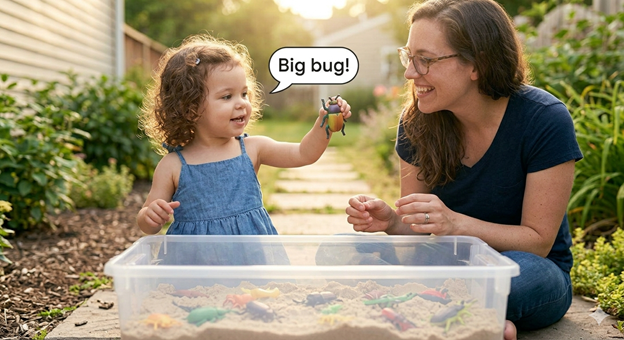
- Begins combining two words: “More milk”, “Daddy go”, “Big dog”
- Loves repetitive books, songs, and naming games
- Speech may still be unclear, but communication intent is evident
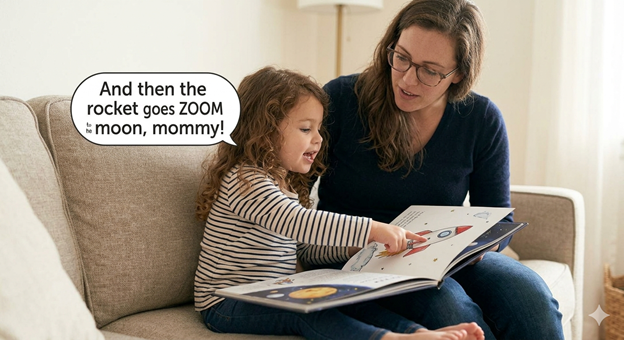
2 to 3 Years
Language Explosion
- Vocabulary grows rapidly often by several new words each week
- Begins using three and four word sentences: “I want more juice”
- Starts asking “What?”, “Where?”, and “Who?” questions
- Strangers can understand roughly half of what the child says
- Uses language to narrate play and talk about past events
- Pronouns emerge (I, me, you) often with entertaining errors (“Me do it!”)
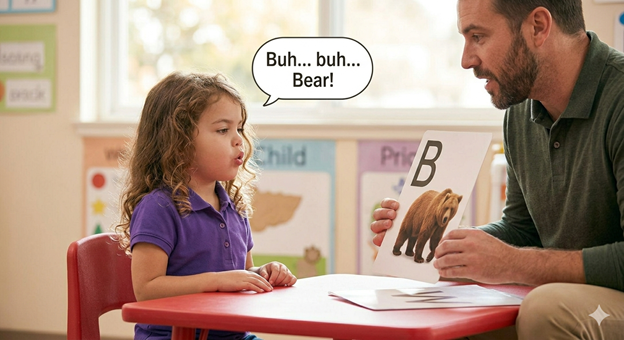
3 to 4 Years
Conversational and Creative Language
- Sentences become longer and more grammatically complex
- Asks “Why?” frequently and increasingly understands the answers
- Uses language to pretend, negotiate, and tell simple stories
- Speech is mostly clear to unfamiliar adults
- Understands concepts of time: yesterday, tomorrow, later
- Can follow two- to three-step instructions without visual prompts
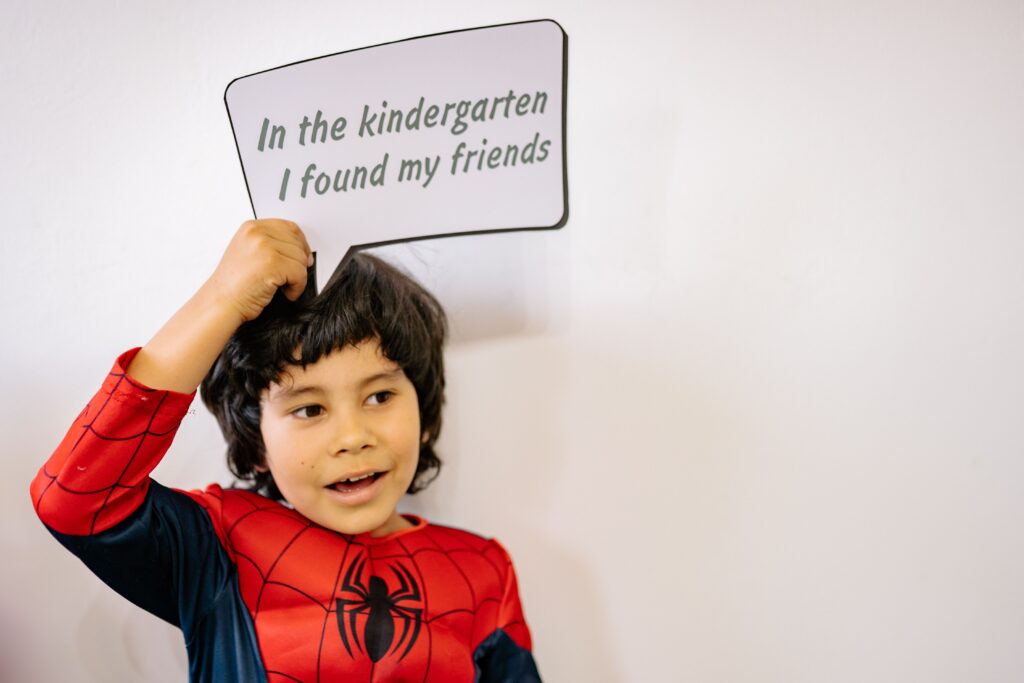
4 to 5 Years
School-Ready Communication
- Uses complex sentences with clauses: “I think we should go because it’s raining”
- Tells structured stories with a beginning, middle, and end
- Understands and uses most sounds correctly (some, like ‘r’, may still be developing)
- Can hold extended conversations on a topic with appropriate turn-taking
- Plays with language enjoys jokes, rhymes, and made-up words
- Vocabulary of 2,000+ words with growing understanding of word meaning and context
5 Factors That Influence Speech and Language Development
1-Home Environment
The home is the child’s first classroom. A warm, communicative home environment where language is used richly, where questions are welcomed, and where children are spoken to with care and interest creates fertile ground for speech development in children. Quiet, unstimulating environments do not provide the input children need to develop language naturally.
2-Parent-Child Interactions
Serve-and-return interactions where a caregiver responds to a child’s communication bid with attention and language are among the most powerful predictors of language development. It doesn’t require specialised knowledge; it requires presence. Looking at a child, responding to their sounds and gestures, narrating what you’re doing together, and following their lead in play all build language in powerful ways.
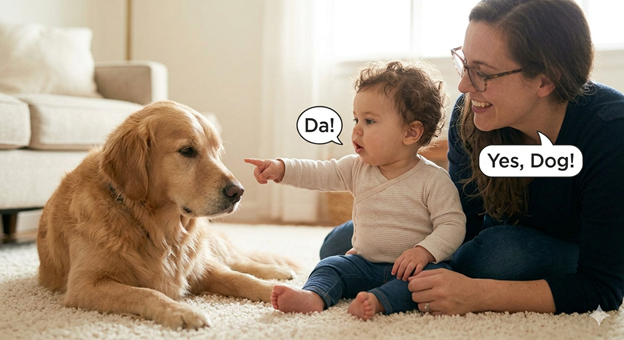
Try this today: When your child points at something, name it, expand on it, and show genuine curiosity. “Yes, that’s a lorry! A big, red lorry. Where do you think it’s going?” This simple exchange builds vocabulary, attention, and the conversational habit of turn-taking.
3-Play Based Learning
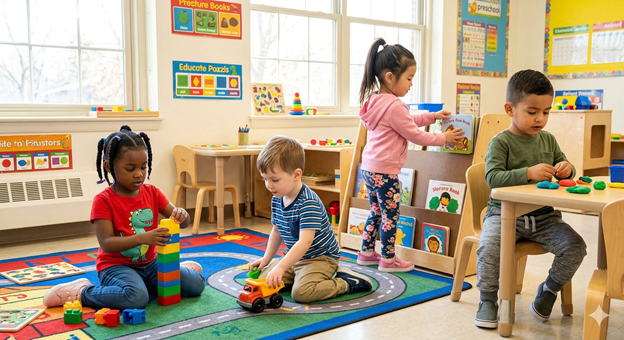
Play is the primary medium through which young children develop language. In the context of play, communication is purposeful, intrinsically motivated, and embedded in meaning. Whether it’s building blocks, role-playing in the home corner, or splashing in puddles, play creates the genuine need to communicate and that is when language learning is at its most powerful. A well designed language-rich environment in any setting will prioritise open-ended play above all else.
4-Hearing and Health Conditions
Hearing is fundamental to language acquisition. Children who experience recurrent ear infections (glue ear, or otitis media with effusion) often miss critical periods of language input, leading to delays that can be hard to distinguish from other causes. Regular hearing checks and prompt management of any ear health concerns are essential. Other conditions, including developmental language disorder (DLD), autism spectrum condition, Down syndrome, and cleft palate, can also affect communication development and warrant tailored support.
5-Screen Time and Technology
The evidence here is nuanced. Passive screen time particularly for children under two offers little language benefit, as language is learned through responsive, face-to-face interaction. However, high quality co-viewed content (where an adult watches, comments, and discusses with the child) can offer some vocabulary exposure. The key variable isn’t the screen itself but whether it replaces or displaces conversation. Digital devices should supplement, never substitute, human interaction in the early years.
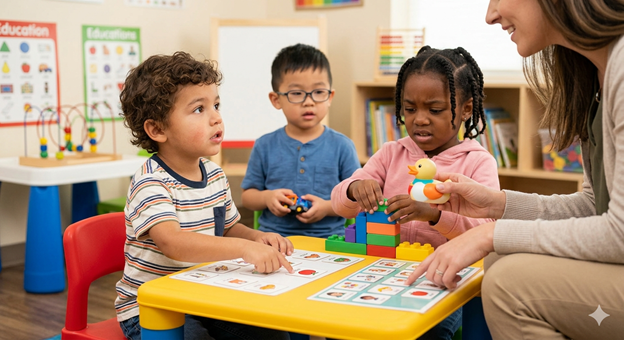
Warning Signs of Speech and Language Delay in Early Years
Identifying delay early matters, because early intervention consistently produces better outcomes than later support. The mistake many well-meaning adults make is offering reassurance rather than taking action. Here are the signs that should prompt a referral not a “wait and see.”
By 12 months:
Not babbling or making varied sounds
Not responding to their name
No pointing, waving, or intentional gestures
Limited interest in faces or social interaction
By 18–24 months:
Fewer than 20 words
Not combining any words
Not pointing to show interest or share attention
Significant difficulty understanding simple instructions
By 3 years:
Speech that’s largely unintelligible, even to familiar adults
No two-word combinations
Apparent frustration with communication
Loss of previously acquired words (always a red flag requiring urgent referral)
By 4–5 years:
Unable to tell a simple story or hold a brief conversation
Difficulty understanding questions or following instructions
Speech sound errors that extend significantly beyond what’s typical for age
Avoidance of communication situations
The single most important thing to understand: parental concern is always valid data. If you’ve got a nagging feeling that something isn’t right with a child’s communication development, trust it. Seek a referral to a speech and language therapist. A professional assessment will either provide reassurance or unlock the support the child needs either outcome is a win.
Practical Strategies to Support Speech and Language Development in Early Years Settings
Reading Together Everyday
Shared reading is one of the single most evidence backed strategies for supporting language development. It exposes children to vocabulary they wouldn’t encounter in everyday conversation, models narrative structure, and creates a shared, focused experience of language. Aim for daily reading and don’t worry if the child wants the same book repeatedly. Repetition is how early vocabulary becomes truly embedded.
Don’t just read the words explore the pictures, make predictions, ask “I wonder why…” questions, and let the child take the lead. A ten-minute interactive reading session is worth more than a passively read twenty-minute one.
Sing, Rhyme, and Play with Sounds
Nursery rhymes, action songs, clapping games, and alliteration activities all develop phonological awareness the auditory sensitivity to the sound structure of language that underlies reading readiness. “Incy Wincy Spider” isn’t just entertainment. It’s a phonological awareness activity wearing a song’s clothing.
Reduce Screen Time, Increase Face-to-Face Interaction
Research consistently shows that background television reduces the quantity and quality of parent-child verbal interaction. Language is learned through responsive, back-and-forth conversation with a real human — not through passive exposure to screen content. This isn’t about perfect parenting. It’s about understanding the conditions under which language learning thrives.
Using Open-Ended Questions
Questions that require more than a yes or no answer stretch a child’s expressive language. “What happened next?” is more productive than “Was it fun?” “Tell me about your drawing” invites far more than “Is that a dog?” Open-ended questions signal genuine interest and give children the opportunity to organise and express their thoughts in their own way.
Creating a Language-Rich Environment
A language-rich environment in a nursery or home isn’t just about books on the shelf. It means labelling things in the setting with pictures and words, creating displays that invite conversation, providing props and resources that inspire imaginative language, and ensuring that adults are genuinely engaging in talk throughout the day not just at circle time.
Learning Through Play
Communication skills in preschoolers develop most naturally in the context of meaningful, enjoyable activity. Make the most of everyday moments: narrate what you’re doing while cooking, count steps while climbing the stairs, describe colours while getting dressed. These incidental conversations are extraordinarily rich language learning opportunities, precisely because they are embedded in real, shared experience.
https://meblogger.com/play-based-learning-in-early-years/
The Role of Early Years Practitioners and Educators
Early years professionals are often the first people, outside the family, to notice when a child’s communication development gives cause for thought. This places them in a uniquely important position not just as educators but as key partners in early identification and support.
Observation and Assessment
Ongoing, purposeful observation is central to good early years practice. Tracking what a child can do, what interests them, and how they communicate across different contexts and with different people provides a much richer picture than any single snapshot assessment. Good observation informs planning and helps identify children who may need additional support before difficulties become entrenched.
Partnership with Parents
Parents are not the recipients of practitioner expertise they are partners in the fullest sense. They know their child in ways that professionals do not, and their engagement with language support strategies at home multiplies any impact made in the setting. Regular, honest, and sensitive communication with families sharing observations, celebrating progress, and discussing concerns early is essential to good practice.
Communication-Friendly Environments
A communication friendly setting is one where noise levels allow for genuine conversation, where adults position themselves at children’s level, where turn-taking and listening are modelled and valued, and where there is space for children to talk, think, and be heard. Physical environment matters: too much clutter, noise, or stimulation can impede rather than support communication development.
Early Intervention Strategies
Well-trained practitioners can implement a range of early intervention for speech delay strategies within the setting: targeted small-group language sessions, focused language play, environmental adaptations, and close liaison with speech and language therapy services. The earlier these strategies are in place, the better the outcomes for children.
When to Seek Professional Help
The most important thing parents and practitioners can do, when a concern arises, is act on it promptly. Waiting to see if a child “catches up” is understandable no one wants to create unnecessary alarm but early referral is always preferable to delayed support.
The Role of Speech and Language Therapists
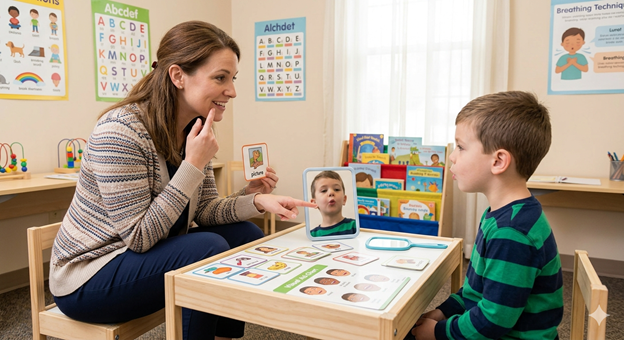
Speech therapy for children, delivered by a qualified speech and language therapist (SLT), involves detailed assessment of a child’s communication profile — including speech sounds, vocabulary, grammar, comprehension, and social communication. From this, the therapist develops a tailored plan, which may involve direct therapy with the child, training and guidance for parents and practitioners, or both. SLTs work in NHS settings, schools, and private practice.
How to Access Support
- Speak to your child’s health visitor, GP, or school nurse for a referral in the NHS
- In many areas of England, self-referral to local speech and language therapy services is possible check your local NHS trust’s website
- The Royal College of Speech and Language Therapists (RCSLT) maintains a directory of registered professionals
- ICAN, the children’s communication charity, offers a helpline and resources for parents concerned about their child’s communication
Benefits of Early Intervention
The developing brain is at its most neuroplastic in the early years meaning it is most responsive to new learning and most able to reorganise in response to targeted support. Children who receive appropriate support for communication difficulties before school entry have significantly better outcomes than those who wait. Early intervention isn’t just effective it is substantially more cost-effective than remediation later in life.
“The best time to support a child’s communication is now. The second-best time is still now.”
Frequently Asked Questions
At what age should a child start talking?
Most children say their first recognisable words around 12 months, though anywhere between 10 and 14 months is within the typical range. By 18 months, most children have at least 10 words, and by two years, most are combining two words together. If your child isn’t reaching these points, it’s worth speaking to your health visitor rather than adopting a wait-and-see approach.
Is my child’s speech and language delay serious?
Not all delays are cause for significant concern — some children are simply later talkers who catch up without intervention. However, it’s impossible to know without professional assessment whether a delay is likely to resolve on its own. If you have a concern, a referral to a speech and language therapist will either provide reassurance or ensure your child gets the support they need. There is no downside to getting an assessment.
Does being bilingual cause speech and language delay?
No. Growing up with two or more languages does not cause speech and language delay. Bilingual children may have a slightly smaller vocabulary in each individual language compared to monolingual peers, but their total vocabulary across both languages is typically equivalent or larger. If a bilingual child shows delays in both languages, a referral is appropriate just as it would be for a monolingual child.
How can I tell the difference between a speech delay and autism?
Speech and language delay can occur with or without autism spectrum condition (ASC). The key additional features that may suggest ASC include: difficulties with social communication beyond language (e.g., limited eye contact, not pointing to share interest, limited imaginative play), repetitive behaviours, and very focused interests. If you notice these alongside communication difficulties, raise your concerns with your GP, health visitor, or the child’s school. A developmental pediatrician can carry out a full assessment.
How much screen time is too much for young children’s language development?
Current guidance from the World Health Organization recommends no screen time for children under 2, and no more than one hour of high-quality co-viewed content daily for children aged 2–5. The concern is not the screen itself but the displacement of face-to-face interaction, which is irreplaceable for language learning. If a child is using screens, sitting with them and talking about what they’re watching significantly increases any language benefit.
What is a language-rich environment and how do I create one at home?
A language-rich environment is one where children are surrounded by opportunities to hear, use, and explore language throughout the day. At home, this means: narrating daily routines (“now we’re washing your hands can you feel the warm water?”), reading together daily, singing songs and rhymes, having genuine conversations at mealtimes, and following your child’s interests in play. It doesn’t require resources or expense it requires attention, responsiveness, and time.
What should I do if I’m worried about a child’s speech and language development at nursery?
Speak to the child’s key person or SENCO (Special Educational Needs Coordinator) as soon as concerns arise. Good early years settings have systems in place for monitoring communication development and for making referrals to speech and language therapy services. With parental consent, a referral can often be made directly from the setting. Early, open conversations with families framed with care and sensitivity are always in the child’s best interests.
Can parents and practitioners make a real difference to speech and language outcomes?
Absolutely and the evidence for this is substantial. Programmes like ICAN’s Early Talk Boost and Elklan’s training for practitioners demonstrate that well-informed, engaged adults can significantly improve communication outcomes for children with identified needs. You do not need to be a trained therapist to make a meaningful difference. Consistent, warm, language-rich interaction is both the simplest and the most powerful intervention available.
Conclusion
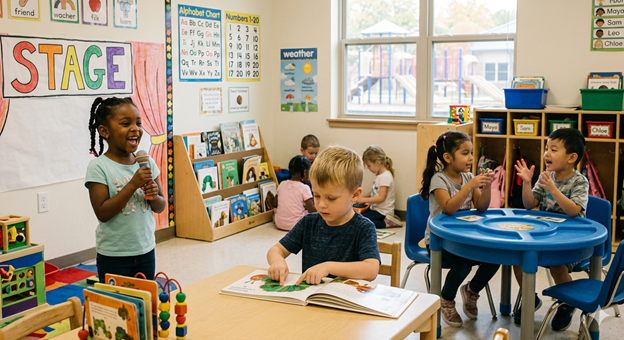
Speech and language development in early years is not a background process that happens regardless of what we do it is shaped, moment by moment, by the quality of the interactions children experience and the environments they inhabit. Every conversation, every shared book, every song, every patient pause while a child finds their words is an investment in their future.
Whether you are a parent, a childminder, a nursery practitioner, or a preschool teacher, you hold more influence over a child’s communication development than any resource or programme. The most important thing you can give a child is your genuine, attentive, responsive presence — and the message, conveyed through every interaction, that what they have to say matters.
Watch for the milestones. Trust your instincts when something seems different. Act early if concerns arise. And in the meantime, talk, listen, sing, read, and play because these ordinary acts are the extraordinary foundations of a communicating, thinking, flourishing child.